Showing posts with label Decolonización. Show all posts

Monday, 26 June 2023

NO SPAIN NO


"Espanya es construeix des de la injustícia, el seu sosteniment i suposada unitat és només una fal·làcia convenient per la qual han pagat un preu horrible els territoris que per la seva existència sostinguda ha hagut d'assimilar-se forçosament. La seva Bandera mostra la sang i el patiment que la seva història estrenya. Espanya com a concepte falla i s'estavella contra una realitat que crida justícia. El seu fracàs encara no s'ha explicat, però a la vista està, en el que es pretén ocultar i denegar. Aquest lloc i zona virtual, està dedicat per contenir i compilar material que pugui servir-li a estudiosos i Detectius Salvatges varis." 

"España se construye desde la injusticia, su mantenimiento y supuesta unidad es solo una falacia conveniente por la que han pagado un precio horrible los territorios que su existencia ha asimilado forzosamente. Su Bandera muestra la sangre y el sufrimiento que su historia contiene. España como concepto falla y se estrella contra una realidad que clama justicia. Su fracaso aún no se ha explicado, pero está a la vista en lo que se pretende ocultar y denegar. Este lugar virtual, está dedicado para contener material que pueda servirle a estudiosos y Detectives Salvages varios."


Esther Planas Balduz Bennici Barcelona Sept 2010

No España de siempre.....

 Lo mejor que pudo hacer Portugal fue liberarse del yugo de España en 1640. Y todavía están alertas por si les invaden de nuevo. (anónimo)

«Castilla hizo a España y la deshizo» (Ortega y Gasset)

«Castilla hizo a España y España deshizo a Castilla» (Sánchez Albornoz)

«Castilla se hizo España» (Julián Marías)

«España uninación, es Castilla ampliada» (José Antonio Ardanza)

«¿Con qué derecho se nos obliga a aprender la lengua de Castilla y no se obliga a los castellanos a aprender la nuestra?“ (Alfonso Daniel Rodríguez Castelao)

Hopeless Times 1936/2019 the ever pervading fascist Spain

Men in my generation have Spain in our hearts. It was there that they learned that one can be right and yet be beaten, that force can vanquish spirit, that there are times when courage is not rewarded. Albert Camus 

Wednesday, 3 March 2021

The European Parliament today showed complicity in Spain’s abuse of human rights by lifting the immunity for MEPs


Thursday, 31 December 2020

Dobles y triples exilos y auto-exilios: en memoria de mis ancestros judíos y moriscos

Hay muchos exilios en tantos de nosotros: Los exilios heredados, los exilios del ser converso, entre traidor y entre vulnerable auto-exiliado de la impotencia entre oportunistas. 


Tantas formas de exilio siente un alma que no se haya que no se encuentra que sigue como a la deriva entre extraños. Heredar una lengua que es con la que se ha herido a tus ancestros, considerar-la natural en su ser materna, en códigos y expresiones que encierran opresión y desprecio. 

Sin saberlo y siendo herida extrañada y confundida por no conocer tu propia lengua, la lengua de tus ancestros. 


El odio sigue de generación en generación, aunque sigue el amor, nos odian las hermanas, las tías incluso las abuelas. 

El odio continúa, como una maldición rara que no puede pararse. Y el amor lucha por encontrar un lugar, un puente, una complicidad. 

No sólo será el Catalán dentro de la tierra y la temporalidad que me vio nacer y crecer, sino el hebreo de mis ancestros y el árabe de mis ancestros. 

Aún hoy, mi dislexia es prueba que comenzaba a escribir de derecha a izquierda, que eran signos dibujados de derecha a izquierda. 

No consigo entrar en los descendientes del Latin Romano.

 No puede mi ser exiliado y confuso, leer a gusto, pensar ni escribir. 

Antes fue un lenguaje Provenzal de romance y Occitano. 

Pero antes y fuerte como la furia de miles de caballos hermosos que quieren liberarse, estaban los signos de derecha a izquierda. Los libretos que se abren por vuestra última página. 

El tema del exilio del auto exilio, del dolor, de sentidos que se despiertan en nosotros algunos en el tiempo actual y otros como heredados de ancestros que pasaron por experiencias específicas. 

Los poemas de Mose ibn Ezra son uno de los tantos textos producidos sobre el tema del exilio. Estos días recordamos los exiliados y perseguidos Catalanes por España. 

Esther Planas Balduz 2019 (i Vidal, i Amat, i Abril, i Gumbert, i García, i Gonzalez, i Bayona, i Cánaves......)


Mosé ibn'Ezra: El poema de los dos exilios

El poema de los dos exiliosTengo el pelo blanco, mas el cabello del Tiempo no ha encanecido, y los días del exilio han vuelto a la juventud.Después de haberse ajado, ha sentido placer la madre de la separación y los hijos del deseo se han enamorado.
Al volverse muy cortos los pasos de mis años, las Hndes del sendero de mis penas como el mar se han ensanchado.
Los oleajes de la vejez asimismo me han cercado, y se ha quedado seca la fuente de la juventud.

Digo a los que me reprenden: «Tened calma conmigo hasta que me lamente», y a los que m e recriminan: «¡Cesad!».

Cesad hasta que ronde por lugares que tan solo por las llamas de mi corazón y el llanto de mis ojos quedaron asolados.
Parecían ciudades destruidas por las que no pasaba pie humano y nadie las habitaba.

Después de haberse desplegado en ellas las alas de la amistad y de haberse arrastrado por ellas los vuelos del amor,
los ejércitos de gacelas disminuyeron en su interior, mientras, por el [contrario, en sus cuatro lados se multiplicaron los chacales para lamentarse. Y o gritaba, mas cómo mudos me iban a responder, clamaba, pero cómo sordos iban a prestar atención.
Tan sólo se me daban a conocer por el aroma a bálsamo de las moradas que habían abandonado.

Hasta que se cubrieran de hierba las piedras de sus ruinas yo seguiría lamentándome, se regarían con el aguacero de mi llanto ^.
Se me heló la sangre del corazón ante la mención del exilio [nedod], también los ríos de mis ojos como un dique se irguieron.

No me ayudaron estos y cada vez que les pedía: «Con vuestros bienes sobornad en mi favor», no querían hacerlo.

Sin embargo, al ver que los carros de viaje corrían hacia mí y los caballos del exilio [nedod] se acercaban, se rompieron los odres de sangre de mis ojos, los cuales
se derramaban día a día con la sangre de mi hígado. 
Decid: ¿Acaso de las fuentes del océano extraían, o
de los abrevaderos de mi cabeza sacaban el llanto? ¿O había en mi interior agua en llamas que, cuando fluía, mi vigoroso rostro se abrasaba?
Se me rompió el corazón cuando alguien gritó: «Disponeos, partid».
También los miembros de mi cuerpo se quebraron el día en el que para lamentarse por mi exilio [nudi] se concertaron mis hermanos y para llorar acudieron mis amigos. Se golpeaban el pecho llorando por mímujeres que no eran mencionadas ni designadas por sus nombres.
Zureaban con el zureo de las palomas y sus mejillas, semejantes al hilo escarlata, se volvieron como el lino blanco. Con lengua suave tiraban del borde de mi corazón y sujetaban mi alma con halagüeñas expresiones: «No abandones a los pedazos de tu corazón quede la cantera de tu amor han sido tallados.
Ten calma, en verdad los que guardan la alianza del amor
yacen con sus amigos aún entre llamas de fuego». Contesté: «Partiré para mostrar a mis amigos mis más excelsos loores que anhelaban. Vagaré buscando lo que perdí, lo que de entre mis brazos los azares capturaron.
Cuando vea a mis hermanos, se regocijarán todos mis íntimos, y quedarán confundidos los que me odian».

Sin embargo, el hombre proyecta, mas el Tiempo desbarata todos los planes que se habían hecho.

Nada conoce acerca de él mi mente, tan sólo que los que amaban se han pasado al odio.
Me ha hecho rodar hacia una tierra en la que se han apagado las luces de mi inteligencia.
Los astros de mi mente con las tinieblas de los de ciencia balbuciente y de habla incomprensible se han oscurecido.
Llegué a un territorio de maldad, a un pueblo con el que Dios está airado y a quien todo lo que existe maldice.
Entre asnos salvajes que aman al malvado, pero [ 'abal] ^ acechan para derramar la sangre del que es recto e íntegro.
Han elegido su camino los que viven con ellos, los que con ellos se han unido y mezclado.
Se han asimilado a ellos y a sus obras hasta el punto de ser empadronados y censados con ellos.
Durante los días de su juventud apacentaron en el huerto de la rec- [titud, mas cuando han envejecido talan árboles en el bosque de la vanidad.

Ellos dispusieron las flechas de los azares en la cuerda, dispararon contra mis más íntimas esperanzas.
Preguntad a los sabios que desaparecieron, aquellos cuyos testimonios viven, aunque ellos se pudrieran; inquirid también en los libros de sabiduría, pues sin boca la verdad expresan,¿han planeado los hermanos un mal como este?, ¿han tenido noticia de las tramas que urdieron?; ¿se han burlado los hijos de los padres comode mí se han burlado mis hijos y me han atacado?
Vientos perfumados que al atardecer pasáis por Granada ^^, y sobre el monte Senir ^^ sopláis, cerneos un poco sobre mis hermanos y dulcemente traed a mi nariz su perfume, traedlo.Traed los saludos de quienes habitan en el rincón del mar,
pues a mi alma complacen los hijos de Occidente ^^. A ellos envío mis quejas sobre una nube ligera, sobre las alas de un querub cabalgan, ya que olvidaron mis amores, me traicionaron,no se han afligido con mi quebranto ni se han dolido, no trajeron mi suerte a su memoria, ni le prestaron atención, no se apenaron, no me han consolado por boca de la pluma, ni los labios de una carta han pronunciado palabras de saludo. Tengo hambre y sed de esos traidores que no sienten sed ni hambre de mí.
Lloro por la época de la amistad, pues del glorioso tiempo
de la mocedad días de juventud fueron cortados, y por la belleza de las noches claras como la luz del sol, más que el ágata brillantes en su compañía. Volaron y se han enrollado como un libro sobrelas líneas escritas de mis alegrías.
Espero ver su imagen en el lecho por medio del sueño y en las fantasías que suspiran por ellos; mas muralla inaccesible es el sueño a mis ojos, demasiado elevada para poderla alcanzar. Mi corazón es muy avaro en consolarse por su exilio, pero mis ojos son generosos en lágrimas.
Haría llorar a los ejércitos de lo alto; si tuvieran ojos,
se consumirían entonces por el llanto. Se disuelve como agua mi corazón al recordar un poco
de su bondad y mis entrañas como cera se derraman. Por vida del cariño que por ellos siento, pues corre mansamente
el agua de la fuente de mi amor y no engaña. 
Estudios de Angeles NAVARRO PEIRO Universidad Complutense, Madrid 
En memoria de Antonio Perai, profesor y amigo.
(c) Consejo Superior de Investigaciones Científicas http://sefarad.revistas.csic.es Licencia Creative Commons 3.0 España (by-nc)


Monday, 14 September 2020

How the U.S. Schemed Against Spain’s Transition from Dictatorship to Democracy

According to conventional wisdom in Spain and in the U.S., in Spain’s transition from the Franco dictatorship to democracy, it was King Juan Carlos, with the assistance of the U.S. government (first the Ford administration, then the Carter administration),

who brought democracy to Spain. In this interpretation of events taking place from 1975, when the dictator died, to 1978, when the first democratically elected government was installed, the U.S. government actively supported the development of democracy in Spain.
The reality, however, was very different. As documented in a recent book by Nicolas Sartorins and Alberto Sabio, El Final de la Dictadura (The End of the Dictatorship), the U.S. government was not very keen on having full democracy in Spain. The primary, if not exclusive, concern of the U.S. government in Spain was to preserve its military and economic interests. Democracy in Spain was the least of its concerns.

As a matter of fact, the U.S. government would have preferred to keep both Franco and the dictatorial regime alive and in good health, rather than open up a democratic process with an uncertain outcome. As the U.S. ambassador in Spain, Mr. Stabler, wrote in February 1975 to Secretary of State (under President Ford) Henry Kissinger, It will be much easier to reach an agreement with the Spanish Government to renew the military bases in that country if Franco stays in power. But he is not going to last much longer and the transition to a post-Franco era has already begun(Archives of the Gerald Ford Foundation. National Security Advisor, Box 12, Spain).  Beginning in 1945, the U.S. government saw Spain as a military base. The democratic forces in Spain, which had helped the Allies in defeating the Nazi regime in Europe (the first battalion to liberate Paris consisted of Spanish republicans), were hoping that the collapse of the Hitler regime would be followed by the collapse of one of its main allies in Europe “ the Franco regime. To bring about that collapse, the Spanish democratic forces needed U.S. and allied support. But the Truman administration had different thoughts. Even though the Cold War had not yet officially begun, the U.S. government saw Franco’s anti-communist stance as an important asset, and his willingness to please the allied forces (to make them forget his support for Hitler) made him very agreeable to the U.S. demands. The most important of these, expressed in a Pentagon study published on April 19, 1945, was the need for the U.S. government to establish its own Gibraltar in Spain. And this it did “ not just one (Rota), but six U.S. military bases equivalent to Gibraltar were established in Spain. It was Truman who gave the green light to save Franco’s regime, and it was Eisenhower who visited Spain to give that regime the international recognition Franco craved. From then on, the U.S. government became the major ally to one of the most hated dictatorships in the history of Europe. (Franco assassinated nearly 200,000 people immediately after his fascist coup in 1939.) The U.S. government also pushed for membership of the Franco regime in NATO, a proposal that was too much for the U.S.’s European allies to accept. They vetoed it. The U.S. military bases came up for renewal in 1975, when Franco’s days were numbered. The Ford administration was aware that the Franco regime was very unpopular, and so were the U.S. government and its military bases in Spain. Even in a poll carried out during the dictatorship (which repressed all opposition views), the majority of Spaniards had indicated they wanted U.S. military bases out of Spain.
During the period 1974-1978, the Spanish working class was restless. Its opposition to the dictatorship was very active. No other country in Europe witnessed such strong popular agitation against its government. From 1974 to 1977, Spain saw enormous labor agitation, the largest in Western Europe since World War II. This worried the Ford administration. Moreover, Portugal was in the midst of a military and popular revolt against Franco’s best friend in Portugal, the dictator Salazar. The Pentagon even made plans in case Portugal and Spain were taken over by political forces hostile to U.S. interests: the U.S. would support the establishment of an Atlantic government, allied to the U.S., to include the Islands of Azores, Madeira, and the Canary Islands. The Pentagon was still recovering from its defeat in Vietnam (Saigon on April 30, 1975), and in Europe the left was positioned to win the elections in France and Italy. It was clear to the Ford administration that however much it might prefer seeing Franco remain in power, things in Spain and elsewhere were getting quite rough for U.S. government interests; it could not afford to lose Spain. And the King became the solution. Franco had appointed Juan Carlos as his successor, and at his coronation he had sworn loyalty to the fascist party (El Movimiento National). But the King (and the U.S. administration) was aware that something needed to change in Spain.
The Democratic Conversion of the Spanish King King Juan Carlos appointed Arias Navarro, a close confidant of the dictator Franco, to lead his first government. The ministers of this government, presided over by the King, were linked to U.S. economic interests and were profoundly pro-U.S. government. The Foreign Affairs Minister, Mr. Areilza, was Spanish ambassador to the U.S. in the 1950s and was close to Rockefeller family interests and the Chase Manhattan Bank. The Minister of Justice, Mr. Garriges Diaz-Caisabete, was Spanish Ambassador in the U.S. in the 1960s (and had played a key role in the renewal of U.S. military bases in Spain) and consultant to many U.S. corporations in Spain. The Vice-President, Mr. Osorio, was once president of the Spanish affiliate of Exxon. The Minister of the Economy, Mr. Vilar Mirt, had been head of a major steel company of the United Steel Corporation.
It was this government that signed the renewal of the U.S. military bases. Just as Franco had needed the military bases to gain U.S. government support, so the King now needed U.S. support to gain legitimacy and international recognition. And the U.S. government gladly offered both, even though the brutality of this government of the Monarchy rivaled that of the Franco regime. Torture, political assassinations, and jailing of political opponents were common practice in Spain under the Arias Navarro government, and the U.S. government was fully aware of this. A reception given by the U.S. Chamber of Commerce for King Juan Carlos at the Waldorf Astoria in New York was met by demonstrations against the royal visit, organized by Amnesty International.
The same support for the Spanish monarchy came from the Carter administration and its Secretary of State, Mr. Cyrus Vance. The profoundly anti-communist position of the King made him attractive to the Carter government, which had pressured its European allies to admit Spain to the European Common Market. The U.S. government thought Spain’s entry into the Common Market would be good for U.S. business interests based in Spain. Here again, no concerns were expressed by the U.S. government that Spain was still a dictatorship, now led not by a general but by a king. The European governments, however, were not ready to admit the Spanish dictatorship into the Common Market. The German Premier Helmut Schmidt, a social democrat, vetoed it. Not so, incidentally, Germany’s foreign secretary, the liberal Mr. Gensher, who supported it. He was fairly representative of the European liberal parties (which are right-wing parties in Europe), which had always put their economic interests above any liberal concerns. It was the social democratic governing parties that vetoed entry of the Spanish dictatorship to the European Common Market.
Continuing labor demonstrations forced the fall of Arias Navarro’s government and the establishment of a new monarchic government, led by Suarez, who had been Secretary General of the fascist movement and had supported most of the repressive measures of the Arias Navarro government. Suarez, along with the King, knew the situation could become explosive – indeed, the first year of the Suarez government saw the greatest labor unrest – unless a more open process was put in place, with legalization of all parties, including the Communist Party. The electoral rules, however, would be designed to discriminate against the working class and against progressive areas of the country, electoral rules that continue to this day. For example, the province of Segovia, a conservative stronghold, needs only 30,000 votes to elect a member of the Spanish parliament. Barcelona, a stronghold for progressive forces, needs 150,000 votes. And although the alliance of left-wing forces “ Izquierda Unida (to the left of the Socialist Party), which includes the Spanish Communist Party – is the third largest party in Spain by popular vote, it is only the fifth largest in Parliament, reduced to a small parliamentary group.
This small piece of history explains why European polls show that, of the populations of Europe, the Spanish population is the least friendly toward U.S. foreign policy. However, correctly reading the political situation in the U.S., the Spanish people have never identified the U.S. government and its policies with the majority of the people who live and work in the U.S. According to the same polls, compared with much of continental Europe, the Spanish population has a greater empathy for average folk in the U.S. “ that is, for the people and the popular culture. They share the opinion held by the majority of the U.S. population expressed in many polls that the federal government does not primarily represent their interests.

Vicente Navarro is Professor of Political Science and Public Policy at the Pompeu Fabra University, Spain, and The Johns Hopkins University, USA. In 2002 he was awarded the Anagrama Prize (Spain’s equivalent to the Pulitzer Prize in the USA) for his denunciation of the way in which the transition from dictatorship to democracy has been engineered, in his book Bienestar Insuficiente Democracia Incompleta, De lo que no se hable en nuestro pais (Insufficient Welfare, Incomplete Democracy; a book about what is being silenced in Spain). He can be reached at vnavarro@jhsph.edu

Published on www.counterpunch.org, Septembre 2007

See in PDF

Wednesday, 5 August 2020

El Gobierno contabiliza 43 símbolos franquistas en cuarteles de la Guardia

Se consideró que 38 debían ser retirados y los cinco restantes podían ser conservados.


Bandera franquista en una manifestación en Madrid.EFE


El Gobierno tiene constancia de la existencia de al menos 43 vestigios franquistas en cuarteles de la Guardia Civil.

Así se lo ha asegurado el Ejecutivo en una respuesta parlamentaria a una pregunta escrita del portavoz de Compromís en el Senado, Carles Mulet.

El Gobierno explica que la Comisión Técnica de Expertos de la Ley de Memoria Histórica contabilizó en 2011 un total de 43 vestigios franquistas en dependencias del instituto armado, de los cuales se consideró que 38 debían ser retirados y los cinco restantes podían ser conservados.


La contestación parlamentaria señala que la retirada de esos vestigios "se viene efectuando de forma paulatina, conforme lo permite la disponibilidad presupuestaria, debido a que no existe un crédito específico habilitado a tal fin".

Para Mulet, "si después de nueve años de elaborarse ese informe, no se han retirado, por ejemplo, los tres escudos que lucen en tres cuarteles de la Guardia Civil en Valencia, ni hay plazo para ello, es que se están burlando de la ciudadanía, demuestra que la ley 52/2007 es una tomadura de pelo, y que tanto para los gobiernos del PP como del PSOE y ahora para el de PSOE-UP, dignificar la memoria democrática solamente está en los titulares y no en los hechos".

Compromís denuncia además que "el Gobierno más progresista de la historia" "vuelva a burlarse del control parlamentario y no aporte la documentación pedida del catálogo donde se pueda ver estos 43 vestigios catalogados, y que tampoco se explique por qué de los 43, 5 pueden ser conservados, ni tampoco explicación de cuantos de los 38 restantes se han retirado". "Son un fraude de Gobierno, como los anteriores", se queja Mulet en un comunicado.

Tuesday, 4 August 2020

Spanish State implicated in the terrorist attack to Catalan city Barcelona

Spain: Has the head of an Islamist terrorist cell really blown up?

Reading time:3 min.
Save to Pocket 
To pressRead comments49Contributions

Stranger and stranger circumstances came to light, statements were hidden, the imam was a secret service agent, the surviving terrorists were not charged with murder

From
  • Ralf Streck

It has long been no secret that the head of the terrorist attacks in Barcelona and Cambrils in the summer of three years ago was an informant for the Spanish secret service .

A year ago, the Público newspaper revealed that the secret service and other Spanish security forces were in contact with Imam Abdelbaki Es Satty until the attacks in August 2017, which Telepolis had reported extensively on ( Spanish secret service controlled terrorist cell .

Now Público has added and published that a key statement about Es Satty's work for the Spanish secret service was hidden in the mountain of investigation files with a volume of 100,000 pages and passed over by the public prosecutor's office and the Guardia Civil. The newspaper does not consider this to be a coincidence, after all, it was the main witness whose questioning had been expressly requested by Spain from the Belgian authorities.

Público rather assumes that the statement should remain hidden. It is therefore not mentioned in a summary of the investigations in the context of a request for legal assistance and it does not appear in the table of contents of a CD on which it is stored. Neither the judge nor the lawyers, therefore, knew of the existence of the statement. And no translation of the statement was sent to the judge responsible.

It is the five-page testimony of Soliman Akaychouh, the head of a mosque in Diegem near Brussels, where Es Satty wanted to preach. Akaychouh was questioned just three days after the attacks and stated in a statement published by Público that Es Satty said he was in telephone contact with the Spanish secret service. "He told me that he was speaking to the Spanish secret service, which among other things wanted to know where he was," said the head of the mosque.

The head of the mosque was suspicious of the imam because of his radicalism and extremism. That's why he got in touch with the Belgian police. The then started a request to the Catalan police. However, this yielded nothing, as the Mossos d'Esquadra, as is well known, had not been informed by their Spanish colleagues about the activities of the well-known radical Islamist and former drug dealer. As Telepolis reported, the Mossos were also left with access to important data and resources from the Center for Combating Terrorism and Organized Crime (CITCO).

Behind this was an unbelievable process in which the Spanish national police warned radical Islamists in 2015 about the investigation by the Catalan policeThe troops were evacuated with the "Operación Caronte" and wanted to carry out attacks on Jewish institutions in Barcelona and the parliament. The Islamists were also in contact with a neo-Nazi, friend of the head of the troop, to get weapons and explosives. And surprisingly, he was not accused of "supporting terrorism".

The big parties are preventing any clarification of the Imam's involvement with the security forces

These events are part of a whole series of peculiarities surrounding Islamist activities in Catalonia and Es Satty. He was known to the Spanish security forces as a radical Islamist since 2003. He was in contact with radical Islamists and was friends with one of those who caused the 2004 massacre in Madrid, which left 191 deadStrangely, Es Satty was also released early from jail where he was on drug trafficking. And his deportation to Morocco, which had been expressly stipulated in the judgment after the sentence had been served, was not implemented either, as he did not pose a "danger".

One could list many more curiosities. There is the fact that all the major parties in the Spanish parliament are refusing to investigate the imam's involvement with the security forces. Then there is the fact that the surviving members of the terrorist cell will not be charged with murder, despite the fact that they killed 17 people - including a German woman - and planned huge attacks. They were prevented because part of the troops was blown up while building the bomb the night before.

"We doubt that the Imám of Ripoll is dead"

The newest and most interesting curiosity, however, is that serious questions now arise as to whether the secret service spy Es Satty actually blew up while building the bomb in Alcanar, which has always been assumed so far. The lawyer Jaume Cuevillas said on Catalan television: "We doubt that the Imám of Ripoll is dead." Cuevillas represents the family of the young Xavier Martínez, who was also murdered during the terrorist drive with the van on the Ramblas.

He didn't find any evidence in the investigation files, such as DNA traces, that could prove that Es Satty was actually in the house at the time of the explosion. According to the investigators, four to five terrorists are said to have been there. However, only the remains of two people were found in the rubble, of whom only one could be identified. Witnesses also testified that the Imam's car drove away shortly after the explosion, which was later found in a neighboring village.

Es Satty's cell phone was also not found in the rubble. The lawyer reports from the investigation files that the phone was still used four days after the explosion. The e-mail address through which the terrorist was in contact with the secret service, as Público had discovered, was also used after the explosion. For Cuevillas it is also noticeable that no one claimed the Imam's body, but that the Imam's niece bought two plane tickets the night after the explosion and hours before the attack in Barcelona. Because of all of this, the attorney expressed "reasonable doubts" that Es Satty is dead.

https://www.heise.de/amp/tp/features/Spanien-Ist-der-Kopf-islamistischer-Terrorzelle-wirklich-in-die-Luft-geflogen-4789034.html?__twitter_impression=true

Monday, 3 August 2020

The NewYork Times: The Immoral Double Life of the Former King of Spain

An outdated culture allowed King Juan Carlos I to become a lobbyist for Arab dictatorships and to hide his fortune for decades.
By David Jiménez

Mr. Jiménez is a Spanish journalist and nonfiction writer.
Aug. 13, 2020

King Juan Carlos of Spain, right, and King Abdullah of Saudi Arabia in 2008.Credit...Pierre-Philippe Marcou/Agence France-Presse — Getty Images
Leer en español

MADRID — One of my first assignments as a reporter, in 1996, was to interview an alleged lover of the king of Spain, Juan Carlos de Borbón y Borbón. My editors at El Mundo asked me to look into whether Bárbara Rey, a Spanish film and television actress, demanded money from the state in exchange for keeping her relationship with the married king secret. In the end, I didn’t get the interview. Under pressure, Ms. Rey chose to remain silent. Thus our king’s two great weaknesses — women and money — remained the country’s worst-kept secret for another two decades.

It’s time we Spaniards acknowledge that we always knew the king had no clothes, but we chose to look the other way.

An outdated culture of allegiance, the opacity surrounding the Spanish monarchy and a Constitution that exempts our kings from any criminal responsibility sent the monarch the message that he was above the law. His immunity from prosecution, designed to give stability to the institution of the crown, was used to amass a fortune primarily through millions of dollars in presumed kickbacks from Arab dictators. He acquired such wealth that in 2012, in the middle of the Great Recession that left 25 percent of Spaniards unemployed, he transferred 65 million euros to his lover Corinna Larsen, a German businesswoman.

The revelation of this royal “gift,” which Ms. Larsen attributed to “gratitude and love” — and investigators consider an attempt to hide illicit deals and large sums of money — is just the tip of the iceberg of a scandal that has forced the monarch into exile.


Juan Carlos I left the country on Aug. 4 and his whereabouts is unknown to us Spaniards. This strategy of keeping him out of the spotlight, after a secret negotiation between the Royal Household and the government, shows that we have learned nothing.

The former king, who abdicated in favor of his son, Felipe, in 2014, should be in the country he ruled for almost four decades while he is under investigation in Switzerland and Spain, including for receiving 100 million euros from Saudi Arabia in 2008. The royal bounty under suspicion, accumulated over decades, includes Ferrari cars, a yacht, luxury trips, land in Morocco and a London flat valued at more than 62 million euros, a gift from the sultan of Oman. It would be naïve to think that such generosity didn’t come at a price.


The Spanish Supreme Court is investigating whether the donation of 100 million dollars from the Saudis was a commission paid to Juan Carlos I for getting Spanish companies to build the high-speed train between Medina and Mecca at a value of 6.7 billion euros. We now know that for years the head of state led a double life as a lobbyist and that in return, his beneficiaries obtained decisive influence in Spain. How much influence? The authorities have only minimal interest in looking under that rock.

Parliament has blocked the creation of a commission that could have revealed the geopolitical implications of the former king’s behavior. The citizens thus miss the opportunity to ask the past four prime ministers of Spain what they knew about the king’s business dealings and their influence on Spanish foreign policy while his immunity from prosecution, which ended when he abdicated, protected him. Back in 1995, a well-known businessman, Javier de la Rosa, told the executive director of El Mundo at the time, Pedro J. Ramírez, that Kuwait paid $100 million as a reward for persuading the Spanish government to join to the coalition against Saddam Hussein during the first gulf war.

For decades, Spain has been a main supporter of Arab dictatorships that, thanks to our monarchy, have found a way to achieve international legitimacy. In November 2018, amid outrage over the murder of the journalist Jamal Khashoggi, Saudi Arabia showcased that Prince Mohammed bin Salman, who some accused of ordering the killing, still had friends: A photograph of a friendly greeting between Juan Carlos I and the crown prince appeared in Saudi news media.

Nor did the repression of protesters calling for democracy in Bahrain prevent the king from frequently traveling to that country, another of the “sister monarchies” that padded his bank accounts. One of Juan Carlos’s wealth managers told the Swiss attorney general’s office that the former king returned from a trip to Manama, Bahrain’s capital, with a briefcase containing nearly $1.9 million.


A demonstration last month in Madrid against the monarchy for alleged corruption.Credit...Oscar Gonzalez/NurPhoto, via Getty Images


Even as we await the decisions made by the judges in Switzerland and Spain, there is no doubt about the immorality of the behavior of the king, who for decades was the most admired man in Spain for his role in helping to lead the country from dictatorship to democracy. But the accumulation of evidence and the progression of the investigations hardly matter: The same political class, business community and courtly press that draped a mantle of impunity over the king has come to his rescue. What should be a question of decency and accountability is instead a polarized debate for and against the monarchy.

The emeritus king’s defenders proclaim that despite his faults, his legacy as the father of Spanish democracy is indelible. They consider it paramount to protect the institution at a time of great political fracture and territorial tensions, including Catalonia’s government bid for independence. The argument is legitimate, but loses its meaning when cloaked in conspiracy theories about a coordinated attack by the country’s enemies to overthrow the monarchy. No one has done more to sabotage the monarchy than the former king himself.

European monarchies are relics of the past whose role has been reduced to tasks of diplomatic representation, patriotic symbolism and, let’s face it, entertainment for the masses. The dissolute lives of the monarchs themselves (and their families) have traditionally been accepted, within certain limits. But when scandals involve a network of child abuse, such as the recently revealed connection of Prince Andrew of England to Jeffrey Epstein, or suspicions of corruption, as with Juan Carlos I, that tacit pact is broken and the question resurfaces: Do we need the monarchy?

An institution like the Spanish one cannot be saved by seeking a placid retirement for the former king. Shielding him from the consequences of his actions and maintaining the usual opacity sends the message to the current monarch, Felipe VI, that he would receive the same treatment regardless of his actions.

What we need is an open debate on the model of our state and deep reforms that adapt the monarchy to the times, starting with putting an end to judicial impunity and establishing a culture of transparency. The idea that in the 21st century, kings can appear unclothed, as in Hans Christian Andersen’s classic tale, and expect their subjects to simply look the other way can result only in an unhappy ending.

David Jiménez (@DavidJimenezTW) is a writer and journalist. His most recent book is “El director.” This article was translated by Erin Goodman from the Spanish.

The Times is committed to publishing a diversity of letters to the editor. We’d like to hear what you think about this or any of our articles. Here are some tips. And here’s our email: letters@nytimes.com.

Follow The New York Times Opinion section on Facebook, Twitter (@NYTopinion) and Instagram.

Saturday, 1 August 2020

Una investigación destapa las vejaciones postmortem contra las mujeres durante el franquismo

La violencia específica ejercida sobre el cuerpo de las mujeres estuvo basada en el fin purificador del franquismo y la política de deshumanizar a las mujeres antifascistas.

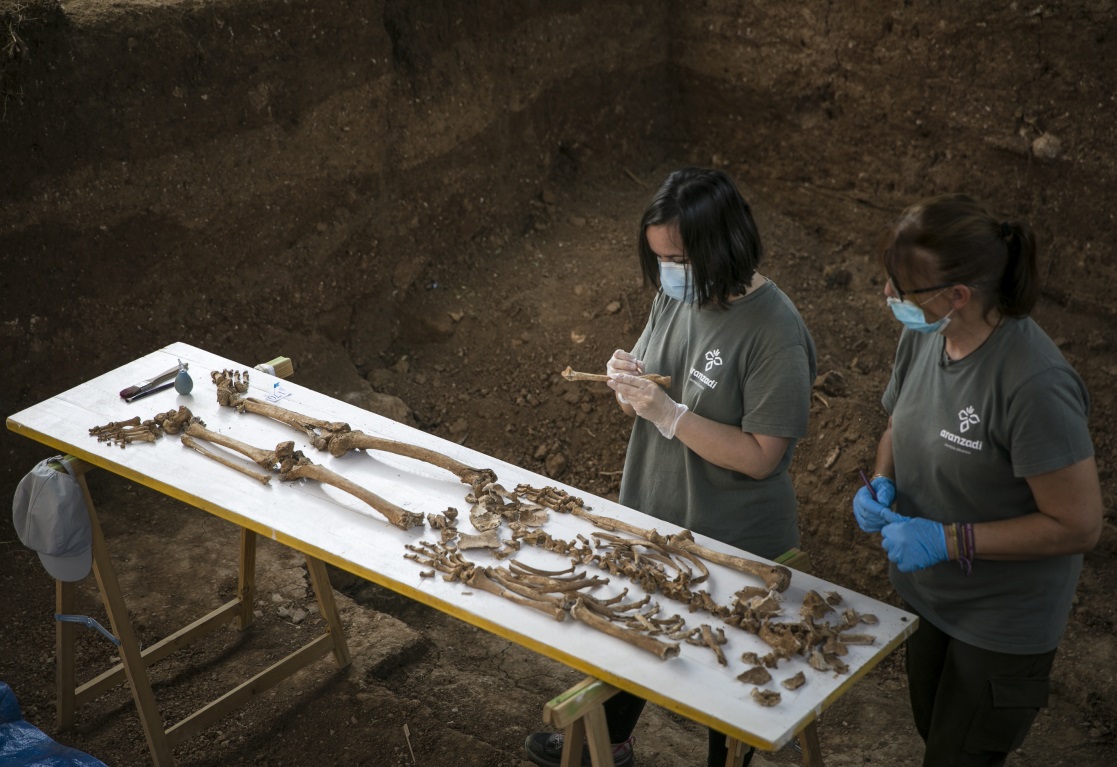
Personal técnico trabajando en la exhumación de la fosa común de Pico Reja, una de las mayores fosas del franquismo, ubicada en el cementerio de San Fernando, en Sevilla. María José López / Europa Press


MADRID12/08/2020 14:28 ACTUALIZADO: 12/08/2020 14:30

MARIAM EL MOURJANY


La arqueóloga, antropóloga forense e investigadora de la Universidad de Ámsterdam y de la Universidad de Extremadura Laura Muñoz-Encinar ha expuesto en su tesis Descubriendo la represión de género: un análisis de la violencia sufrida por las mujeres durante la Guerra Civil y la dictadura de Franco en el suroeste de España, como durante la Guerra Civil y la dictadura, miles de mujeres fueron vejadas, violadas, torturadas y asesinadas, y a diferencia de los hombres, sufrieron además otro tipo de represión de carácter sexista incluso después de la muerte por ser mujeres.

La antropóloga forense ha realizado un análisis basado en historias de mujeres víctimas, que sufrieron humillaciones físicas y psicológicas, y en fosas comunes con cuerpos de mujeres. Argumentando que las diferentes represiones fueron motivadas por la percepción de las mujeres como ciudadanas de segunda clase y por tanto inferiores a los hombres.

Testimonios orales y archivos históricos han documentado multitud de acciones represivas asociadas al género: se ejercía una posición dominante contra ellas en base a descalificaciones y amenazas para establecer una superioridad masculina. En su cuenta de Twitter Laura Muñoz-Encinar recoge parte de su tesis.

La investigadora explica que ideólogos franquistas, como Vallejo-Nájera, "consideraban a las mujeres seres inferiores y volubles, que hacían uso de las revoluciones sociales para dar rienda suelta a sus latentes apetitos sexuales, convencidos de su crueldad, perversidad innata y criminalidad natural".

Para los franquistas el feminismo y las políticas de igualdad introducidas durante la Segunda República caracterizaban "la creciente corrupción de la mujer, castigadas por actuar de forma impropia a su género hasta el punto de que roja adquirió el significado de no-mujer", añade.

Esta superioridad y valoración subordinada del género femenino fomentó los castigos como consecuencia de su actividad política durante la República o porque eran esposas, madres y hermanas de republicanos.

Las investigaciones se han llevado a cabo a través de exhumaciones de fosas comunes que han aportado datos sobre los centenares de mujeres de las que no existe registro documental.

Tortura para "expulsar al comunismo de sus cuerpos"

Los distintos tipos de castigo podían ser físico, a través de la ejecución, tortura y violación primero durante la guerra y luego en las cárceles de Franco, y psicológico, exponiéndolas públicamente con el cabello rapado y desnudas o semidesnudas, tras haber ingerido aceite de ricino, con el objetivo simbólico de "expulsar al comunismo de sus cuerpos".

"Durante la ocupación militar numerosas mujeres fueron violadas y ejecutadas", en muchas ocasiones embarazadas, como en Llerena o en Fregenal de la Sierra.

La vejación continuaba después de la muerte


En ocasiones, la vejación de las víctimas continuaba tras la muerte. Varias mujeres fueron enterradas desnudas entre dos varones, con un alto componente simbólico. Paralelamente, en áreas de retaguardia numerosas mujeres eran "paseadas y enterradas en fosas en cunetas o sacadas de las cárceles en la que habían permanecido sin ninguna garantía procesal".

"En las fosas hemos encontrado un patrón distinto sobre cómo acaban los hombres y las mujeres dentro de un mismo depósito. Generalmente, las mujeres fueron las últimas en ser introducidas dentro de las fosas y se solían depositar en la misma área".
Disposición de una fosa. / Laura Muñoz-Encinar

Tras la guerra muchas mujeres confiaron en las palabras de Franco y volvieron a sus pueblos, pero fueron detenidas de forma inmediata, como la maestra Matilde Morillo, al descender del tren con sus hijas. Torturada, violada y ejecutada. "Su cuerpo permanece aún desaparecido. Al amanecer los perpetradores regresaron con el abrigo de Matilde en la punta del fusil a modo de bandera, como si de un trofeo se tratase"


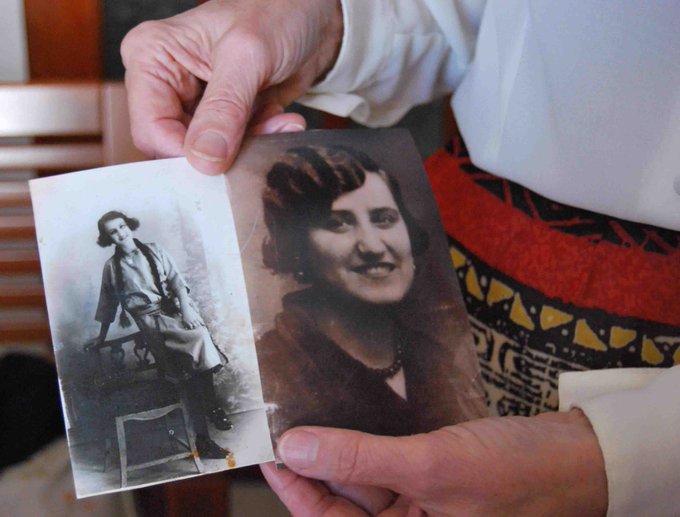
Fotos de Matilde Morillo / Laura Muñoz-Encinar

En el caso de Matilde y de otros tantos cuerpos hallados, Muñoz-Encinar tuvo un gran problema: la identificación de las víctimas. Puesto que en múltiples ocasiones no hay registro alguno de las personas ejecutadas, así como tampoco del lugar donde fueron enterradas, la posibilidad de reconocer a las víctimas se vuelve remota. "Con Matilde, hay una clara intención de ocultar su violento destino en la documentación oficial. Esto es también el caso de muchas otras víctimas de la 'justicia de Franco'".

"El porcentaje de mujeres asesinadas es inferior al número de varones. La violencia específica ejercida sobre el cuerpo de las mujeres estuvo basada en el fin purificador del franquismo y la política de deshumanizar a las mujeres antifascistas", explica la antropóloga. A algunas mujeres les faltaban pertenencias personales, que probablemente se perdieron durante la tortura o fueron retirados para usarse como trofeo

En relación a la arqueología, las pertenencias personales registradas en fosas comunes incluyen artículos relacionados con actividades e identidades profesionales relacionadas con la mujer. Algunas mujeres de las fosas comunes les faltaban algunos elementos de la ropa y las joyas. Estas pertenencias personales probablemente se perdieron durante el maltrato al que fueron sometidas las mujeres antes de ser asesinadas, en el que el abuso sexual fue recurrente, o como significado simbólico, por ejemplo el caso del abrigo de Matilde Morillo en Castuera, podrían haber sido retirados de las víctimas y utilizados como trofeo por los perpetradores.

La investigadora Laura Muñoz-Encinar, concluye su tesis con una cita del libro Individuas de dudosa moral: la represión de las mujeres en Andalucía, de Pura Sánchez: "Las mujeres eran consideradas como un cuerpo, un territorio donde los hombres proyectaban sus deseos de victoria o dominación. La materialización de esta violenta represión hizo visible simultáneamente, en un mismo gesto, la victoria de los vencedores y la sumisión de los derrotados".


Te necesitamos en la República

En la República de Público ondeamos la bandera del periodismo valiente y de calidad. Nuestra independencia no depende de los poderosos, sino de personas como tú.

FORMA PARTE DE NUESTRA REPÚBLICA
ETIQUETAS
SOCIEDAD
VÍCTIMAS DEL FRANQUISMO
MUJERES ANTIFASCISTAS

Friday, 31 July 2020

David Fernandez: Pintures negres

La sala segona és la continuació d’una guerra política per altres mitjans

28/07/2020 19:54


987x555Carme Forcadell en una imatge d'arxiu


Carme Forcadell en una imatge d'arxiu / CELIA ATSET

El Suprem designa Manuel Marchena per decidir sobre l'admissió a tràmit de la querella d'Ò


DAVID FERNÀNDEZPeriodista i activista social
Segueix-me
24

Comparteix Guarda


«Summum ius summa iniuria»
Ciceró


Goya. La letra con sangre entra. I d'haver de digerir aquella "dissonància cognitiva" que una Fiscalia també experta en psicologia social atribuïa a Jordi Cuixart, hem hagut de passar a escoltar el Suprem etzibant que la reinserció de l’estimada Carme Forcadell ha de ser una altra i diferenciada. Per què? Perquè és la Carme. La distinció segregadora és l’enèsima prova del caràcter polític i el tracte polititzat del cas i del que ja era més que previsible: les ganes de brutalitat judicial amb la revocació dels tercers graus i els 100.2. Anatomia de la crueltat tocada de negre toga i la neta –i bruta– vocació de suplantació política. Suprema vergonya, no s’han atrevit pas a descriure quina ha de ser l’alternativa reinseridora a la natura política del delicte comès per la Carme: permetre un debat parlamentari en un Parlament democràtic. És a dir, tant com complir escrupolosament amb la seva responsabilitat institucional sense admetre ingerències indecents.

El jutjat accepta la petició de la Fiscalia i suspèn el tercer grau de Romeva, Junqueras, Forn, Sànchez i Cuixart

Però ni el recurs a la malaltia dels fiscals ni el tracte dispensat ad hoc, ad hominem et ad feminam, no és nou sota un cel de plom i uns tribunals estantissos. Rutina i excepció alhora, que sigui el Suprem qui decideix de nou i qui determina altre cop és pura política d’estat. La sala segona és la continuació d’una guerra política per altres mitjans. Prova del cotó fluix reiterada i repetida del que neguen endebades: el caràcter purament polític, repressiu i autoritari del judici, de la sentència i dels empresonaments. El búnquer judicial ja és això i ja és així. Un periodista ho va resumir nítidament fa temps: l’aznaritat no va colonitzar l’aparell de l’Estat ni va capturar les altes instàncies judicials espanyoles per a no res, sinó per a tot plegat.

El fiscal Zaragoza deia el 2019 que "la supremacía de la voluntad popular sobre la ley está en el origen de funestas experiencias históricas bien conocidas". Algú li hauria d’explicar què passa quan és a la inversa, quan la llei s’imposa a la democràcia, que és precisament quan s’han produït les experiències històriques funestes a què feia referència barroerament. Contradictio in terminis, també afegia que "la ley es, ni más ni menos, que la expresión democrática de la voluntad popular". És tot just el que passava al Parlament de Catalunya. De funesta i macabra memòria són també totes aquelles experiències històriques que han recorregut indistintament al llenguatge militar o sanitari per tractar l’altre de malalt i erigir-se ells en cirurgians de tercera o salvapàtries de segona. I així ens va. Absolutament malaltissa, completament desbocada i terriblement venjativa és la ideologia que mou el clan dels fiscals.


Absolutament malaltissa, completament desbocada i terriblement venjativa és la ideologia que mou el clan dels fiscals


Ara bé, no s’imposen aquesta mena de discursos profilàctics, depuradors i inquisitorials sense que abans s’hagin estès des de l’esfera política, mediàtica i institucional. La caverna fa la feina i al final pren forma de sentència. Envien la pilota a la teulada de la judicatura i després no hi ha qui la recuperi: l’anell és meu. Bilis de poder. A aquesta tropa, per tal d’escarmentar-ho tot, com deia sàviament abans-d’ahir Joan B. Culla, se’ls enfot si pel camí amenacen o es carreguen els drets de totes les persones preses. Si cal, ho faran, per demostrar un pretès tracte igualitari a tothom i camuflar com a pretès privilegi el que és discriminació política. Només llegint la Transició amb el manual adoctrinador de Victoria Prego es pot viure en el seu món feliç.

Passa que la memòria sempre és un problema i alhora la millor alternativa, perquè pel mirall retrovisor es veu el que es veu. I sovint més clar. Que topes, per exemple, amb el 23-F: ara sí, un intent de cop d’estat. Realitat contra ficció, sura l’evidència radical que als que van voler tombar l’ordre constitucional i l’aleshores anomenada jove democràcia espanyola –cada cop més infantilitzada des d’aleshores– sí que se’ls va acabar indultant quan va tocar –general Armada–, alliberant-los moltíssim abans que complissin la sentència imposada en tots els casos i ascendint-los sovint. Per acabar, rivet d’or, pagant-los a tots la màxima pensió militar. No està malament, oi? La revisió és eloqüentment dramàtica.

Els recents arguments esgrimits pel Suprem, que interpreta la norma al seu grat i la canvia discrecionalment quan convé, es desmunten amb els arguments passats del Suprem. España, rotos y descosidos, SA. El cinismetròmetre esclata. I la farsa peta. ¿A petició de qui es va enllestir l’indult del general Armada? Efectivament, del Tribunal Suprem. Un informe favorable de la sala militar. Què va dir el jutge de vigilància penitenciària en relació al respecte a la Constitució a què Milans del Bosch es negava? Obrin els ulls, parin l’orella i no badin boca: "La citada garantía debe forzosamente presumirse" i, per tant, el seu rebuig al sistema democràtic no va ser cap obstacle insalvable per a la seva llibertat. Què havia dit Milans del Bosch el 1985 rere la sentència? "Ante las mismas circunstancias, volvería a hacer lo mismo". És a dir, que si ets militar colpista i dius que ho tornaràs a fer, ja ho veuen, al carrer. Catifa. Catifa i sou: Milans sempre va cobrar, fins i tot ja expulsat, el 80% d’una elevada pensió militar. Llei de l’embut, ells sí nosaltres no, el passat 12 d’octubre el general Pedro Garrido va emprar idèntiques paraules casernàries per vindicar la violència institucional de persecució de l’1 d’Octubre, afegint de cirereta: "Lo volveremos a hacer". No li va passar res. És sobrer recordar-ho, ja ho sé.

Algú objectarà que això són fets dels 80 i dels 90. Indubtablement. I precisament per això són elements constituents, constitutius i definitoris del model político-jurídic que patim: on ja no hi ha dret penal d’enemic sense dret penal d’amic. Al capdavall, dialèctica dels separadores y separatistas que intuïa Vázquez Montalbán, l’augment de l’independentisme serà proporcional a cada suprema injustícia. Fins i tot es podria forçar una darrera paradoxa. Todos al suelo, deien els colpistes del 23-F per via militar colpista. Todos al suelo, ordenava la troica quan aconseguia el miracle de reformar via exprés la irreformable Constitució espanyola un agost del 2011 per aplicar el seu brutal pla neoliberal. I todos al suelo, per la via judicial, dicta ara el Suprem. Però si tots tres diuen exactament el mateix, salvant totes les distàncies de cada cas, és senzillament perquè saben que seguim, com podem, dempeus.

"No nos incumbe ofrecer –ni siquiera, sugerir o insinuar– soluciones políticas a un problema de profundas raíces históricas". La frase no és meva. És de la mateixa sentència del Procés dictada pel Suprem. 100 anys de presó. Menteixen obertament en el seu simulacre mediocre: cada decisió que prenen no és res més que una resposta política calculada per evitar qualsevol mena de solució democràtica, escalfada pels cenacles de poder madrileny prealçats contra el govern socialcomunista. Si no, no s’acarnissarien amb la Carme ni amb la resta de presos i preses polítics. Ho escric en un dia vint-i-vuit que no és de desembre, sinó de juliol. Però en aquest ordre celtibèric de les coses, la innocentada és ja cada dia. Por la puerta de detrás, com diria Cosidó sobre Marchena. I ara ja per la portalada principal. Segle XXI, cau el teló i cau el teatre sencer: que se note el cuidado y que, sobre todo, se note el efecto. Entre tanta negror, dubto molt que hagin guanyat. Però sí que sé que ja ens han perdut. Definitivament.