Sunday, 10 March 2013

Spanish Holocauste ( Paul Preston's recent publication)


That is what Paul Preston, a leading British hispanicist and highly respected historian in Spain, has done in The Spanish Holocaust. The result is an essential read for anyone wishing to understand Spain and its recenthistory. It is also a damning indictment of Franco's deliberate and far-reaching brutality, which destroys the myth cherished by some Spaniards that he was a "soft" dictator.
One of the many remarkable things about thisnarrative of butchery is, indeed, how it proves Garzón's central accusation – that Franco enacted a ruthless plan involving the "detention, torture, forced disappearance and physical elimination of thousands of people for political and ideological motives … a state of affairs that continued, to greater or lesser extent, after the civil war ended".
Preston provides facts, figures and harrowing descriptions in the first full and proper attempt to explain the horror. He does not shy away from strong words – "holocaust" is deliberately chosen to describe the extent of cold-blooded killing "because its resonances with systematic murder should be evoked in the Spanish case, as they are in those of Germany or Russia". Nor does he ignore the undoubted cruelty and the crimes committed on the Republican side of a three-year civil war sparked by a 1936 military rightist uprising against an elected government. Two-thirds of the clergy in the Catalan province of Lleida were killed. A third of all monks in the Republican zone also died. That is extreme religious persecution.

about Montalban ( source The International Socialism journal on line)


The anger and ethics of Manuel Vázquez Montalbán

Issue: 110
Posted: 6 April 06

Mike Eaude

Manuel Vázquez Montalbán (1939-2003) was one of the last of the engagé writers of Southern Europe, left wing intellectuals produced by the large Communist parties of the 1960s and 1970s. Prolific journalist, essayist and novelist, he was an outstanding interpreter of Spain in its transformation from the sad, frightened country of the Franco dictatorship to its limited, but vibrant, bourgeois democracy today.

Occupied city

Montalbán, born in the year of Franco’s Spanish Civil War victory, grew up in the slums of Barcelona during the grimmest years of the dictatorship. Many men were absent—dead, exiled or in jail. Montalbán met his father for the first time when, aged five, he passed a strange man on the stairs. A few streets down from Montalbán’s home on the Calle Botella, the biggest brothel district in Europe thrived. Working class women in these post-war years often had to choose between prostitution and their children’s starvation. Mass prostitution, which the anarchists had sought to abolish during the Spanish Revolution of 1936 by closing brothels and encouraging women to take up arms against fascism, prospered under the rule of Franco and the church.

1940s Barcelona was treated by Franco and a vengeful Catalan bourgeoisie as an occupied city. For the regime, Catalans were guilty of three cardinal sins—Communism, atheism and separatism. Franco set out to extirpate all signs of Catalan and working class culture.

In the Raval, the part of Barcelona’s Old City where Montalbán grew up, particularly punished by the bombs of the Italian air force based on Mallorca during the civil war and a traditional stronghold of anarchism, 99 percent of the population was anti-Franco. Montalbán remembered women with children begging for scraps at their door, even though his mother had no income apart from what she earned by sewing. He remembered their fear of ‘fascist commandos with their heads shaved to the scalp who forced people to drink castor oil’ just for speaking Catalan. In a memorable phrase in The Pianist, a character says, ‘I know the neighbours, almost all of them have lost the war and they carry the post-war round on their backs like a dead body.’ Just to survive, the defeated and impoverished population needed basic solidarity with each other. This background, both an open wound and an ethical touchstone, pervades all Montalbán’s writing.

Montalbán was one of the few who escaped from the Raval to the university, another world only a 15-minute walk from his home. At university he became involved in opposition politics, was arrested in 1961, beaten up personally by the notorious torturer Inspector Vicente Creix and sent to Lleida jail. This was, Montalbán said, his second university. He joined the PSUC, the Catalan Communist Party, a commitment he maintained throughout his life.1 Despite his international renown as a prize-winning essayist and novelist, he remained loyal to the solidarity of his childhood right up to his fatal heart attack in October 2003.

Released from jail in 1963, in an amnesty occasioned by Pope John XXIII’s death, Vázquez Montalbán embarked on a career as a journalist. His early fame came from his skilful political analysis and acid, sarcastic turn of phrase, especially in the PCE-sponsored Triunfo. A more lasting claim to fame and the motive for this article is that, between 1977 and 1990, he wrote half a dozen novels that stand among the best in modern Spanish literature. The Pianist (1985),2 discussed below, is his masterpiece. Galíndez (1990) runs it a close second: it is a fictionalised account of the 1956 kidnapping in New York of an exiled Basque Nationalist leader and his torture and murder in the Dominican Republic by the dictator Trujillo.

Montalbán became best known, though, for crime novels, featuring his detective,
Pepe Carvalho. Of these, The Angst-Ridden Executive (1977), Southern Seas (1979) and The Rose of Alexandria (1984) fall into the half-dozen mentioned above.3 In Montalbán’s crime novels, the crooks are revealed as the rich who defend their privilege with murder. This was not new. Raymond Chandler, king of the modern ‘hard-boiled’ crime novel, explained in the 1950s:

‘The realist in murder writes of a world in which gangsters can rule nations and almost rule cities, in which hotels and apartment houses and celebrated restaurants are owned by men who made their money out of brothels…where the mayor of your town may have condoned murder as an instrument of money-making.’


Chandler carries on in this vein, and doubtless readers of this journal need little convincing. However, Chandler was not a man of the left. Rather, like many writers of his period, he hated the gangstercapitalists who he blamed for destroying the lives of middle class people like himself in the 1930s Depression.

Like Chandler in Los Angeles, Vázquez Montalbán tears the mask of democracy off a city—Barcelona, in his case—run by crooks, but the context is very different.
The Angst-Ridden Executive and Southern Seas were written at the time of Spain’s 1970s transition from dictatorship to bourgeois democracy. The background is not the defeat of the left in 1940s Los Angeles, but the mass struggle against the Franco dictatorship. Montalbán was not (as Chandler was) a former oil company executive, but an activist in that struggle. In his 1970s and 1980s novels, Montalbán is explaining how the change in 1970s Spain was not a ‘rupture’ with the dictatorship, but a controlled ‘transition’ to parliamentary democracy. He shows how ‘the same dogs with different collars’ continued to exercise power in the new Spain. The political structures changed, but economic power remained in the hands of not just the same class, but the same individuals. 

Sceptic or cynic?

Montalbán’s experience as a campaigning journalist had taught him that, with an increasingly sophisticated mass media assimilating opposition, it was not enough for a left wing journalist just to denounce injustice. He was ambitious to reach out to an audience even wider than the big readership of his articles in Triunfo. With crime novels, Montalbán found a popular genre with down to earth language, in which he could include the songs, memories, smells and tastes common to his own and millions of others’ youth.

Montalbán conceived the Carvalho novels as a chronicle of contemporary Spanish and Catalan society, explaining events to his readers very soon after they had occurred:

‘In each book I look at different questions: in The Angst-Ridden Executive the illusions of the transition from dictatorship to parliamentary democracy, in Murder in the Central Committee the crisis in the Communist Party, in Offside sport and the fleeting nature of media fame, in An Olympic Death entrepreneurs whose athleticism consisted in lining their own pockets as quickly as possible.’


In The Angst-Ridden Executive, for instance, Carvalho investigates the murder of Antonio Jauma, found dead with a pair of women’s knickers in his pocket. The police quickly conclude that Jauma was the victim of a sex intrigue. Unconvinced,
Carvalho finds that Jauma was killed not because he was a womaniser—though he was—but because he was honest. Jauma was silenced because he had discovered a financial hole in the multinational company he worked for. The multinational had helped finance the 1973 coup in Chile, and now money is being illegally siphoned off to fund fascist groups during Spain’s transition. As one of the characters explains, ‘[Fascist groups] probably won’t be necessary, but the ruling class likes to cover all contingencies.’

In his investigation Carvalho visits six of Jauma’s friends from their time together in the underground struggle at university 15 years before. Montalbán uses the investigation to look back into history, to note how each character has evolved, to examine who has betrayed their youthful beliefs and who has not.

He gives his narrative historical depth in another way too, throughout the Carvalho novels. The detective’s office is at the seedy end of the Ramblas and he often wanders through the Raval, where streets, bars, shops and people he meets all spark off memories. In this constant inventory of the past, Montalbán is writing an alternative working class history, a history of those excluded from official history. The detective has a sort of ‘family’—his call-girl girlfriend Charo, his ‘secretary’ and ex car thief Biscuter, and the ex-fascist boot-black Bromide. All three have their own carefully documented histories. Bromide, for example, was a volunteer with the Spanish Blue Division fighting for Hitler in 1941 against the Soviet Union. Living at the bottom of society, Bromide is a reminder that Franco didn’t even look after his own.
The detective, clearly not to be identified with the author but nevertheless sharing much of his past and his point of view, is vital to making the novels work. Carvalho loves good food, wine, sex and long rambling conversations. Quite consciously, Montalbán challenged a certain puritanism on the left by creating a hedonist detective. Given the world’s a mess, Carvalho ruminates, he has to look after himself, because no one else is likely to. For this reason, he has often been called a cynic. As if to reinforce this, the detective growls, ‘I believe only in my stomach,’ early in The Angst-Ridden Executive. But at the climax of the novel, when the murderer offers Carvalho a Nuits St George, Carvalho does not act cynically. Magnificently, he pours the exquisite wine onto the priceless carpet. He is a sceptic, as you have to be when listening to the lies of the powerful, but no cynic. He will not drink with a killer. Like Chandler’s detective Marlowe, Carvalho is the moral man on the mean streets.

The revolutionary Marxist Ernest Mandel had a related criticism in his social history of the crime novel, Delightful Murder:

‘In general all Montalban’s books are soaked in an atmosphere of spleen, scepticism and fin-de-siècle ennui, very significant as the background of a whole layer of intellectual Eurocommunists. It is a break with Stalinist dogmatism and hypocrisy, but hardly a step towards greater lucidity of what this society and this world are all about’.4


There is some truth in Mandel’s comment, for Montalbán’s tone is often one of rather bitter sarcasm. This is rooted in his appreciation of the defeat the working class suffered in the transition, and his and its subsequent disenchantment with the new ‘democratic’ Spain. Mandel, however, fails to pick up the contradictions in Montalbán. As a Communist Party member, Montalbán supported all the nefarious deals made by the PCE with the ruling class to hold back working class struggle. However, as a novelist, where he lets his imagination rip, he shows a reality which does not excuse this CP-led defeat of the working class. Similarly, in his 1990s fiction he was an outspoken critic of Barcelona’s Olympic Games and the building speculation, corruption and destruction of historic memory they brought, yet the party to which he belonged supported the games.

Mandel’s remarks also make one ask, what would a revolutionary detective novel be like? How would it be different from Southern Seas, in which the detective reveals the lies of the powerful, gives voice to the working class, expresses and practises solidarity with the poor, explains the history of the people and places he describes, shows the ruling class as imbeciles or cynics, deliberately avoids handing over criminals who are criminals because of their social oppression to the police who are portrayed as the enemy, and recognises explicitly that a detective—one person— cannot change the world, however much he wants to?

No escape

Southern Seas’ title announces its theme—the yearning to run away. Carlos Pedrell, a capitalist with artistic leanings who is terrified of ageing, wants to follow in the steps of Gauguin. But a year after leaving, supposedly for a South Pacific island, he is found dead. His exotic destination was much closer to home—the cheap estate whose construction he himself had financed in the suburbs of Barcelona. Montalbán, good materialist that he is, always explains where people’s money (or lack of it) comes from. In the 1950s Pedrell had made his fortune building blocks of flats, ‘vertical shanty-towns’, for workers who migrated from southern Spain. These were thrown up without basic services or transport on the outskirts of industrial cities like Barcelona.

The central character of Southern Seas is Ana Briongos, a Communist and car factory worker who lives on the estate built by Pedrell. Unlike the other characters, she knows there is no escape to a fantasy world, which is why she fights in union and party for a better world here and now. It is Ana who explains to Carvalho the Moncloa accords of late 1977, the pact that rounded off the transition. The Communist Party, which had already accepted the monarchy in return for its legalisation, now signed with government and bosses an agreement to restrict wage rises to a maximum 22 percent when inflation was running at 29 percent. Ana, the rank and file fighter, explains:

‘No one swallowed the Moncloa pacts, but we had to defend them with all the good faith we could muster…that in the long run they would favour the working class. In short, we spouted what they’d told us to say. Soon everyone saw it was a sell-out, like all the rest.’


With the character of Ana, Montalbán breaks with traditional ‘hard-boiled’ novels by introducing the organised working class. He also breaks with their characteristic sexism—Ana speaks with her own voice.

The defeated within the defeated

The Pianist is a non-Carvalho novel that takes the two high points in Spain’s 20th century class struggle, the revolution of pares them. The choral novel is divided into three parts. In the first, a group of anti-Franco ex-university friends, on a night out in 1983, go to a fashionable club in the Raval, with transvestite singers and an elderly pianist. Javier Solana, the new Socialist minister of culture, is holding court at one of the tables. Not even Montalbán, so politically prescient, could have realised how suitable a representative of Spain’s new rulers Solana was. This affable, smiling cultural mandarin would become NATO general secretary, and be responsible for the bombing of Belgrade in 1999 on behalf of the main imperialist powers.

Half the group of friends, now building their professional or business careers, look back on the transition as ‘a confused period’, and the other half are disoriented by how little was gained in the transition. At the end of the night Montalbán leaves the group of friends and follows the old pianist, who walks home to his dingy flat where a bedridden old woman awaits him. Lovingly, the old man talks to the invalid and washes her.

The middle part of The Pianist moves back to 1946 in the same Raval. This intense heart of the novel draws on Montalbán’s childhood memories and is one of the most deeply felt and beautiful passages in his 80-odd books. A group of young people are on the flat rooftops, the only place where they can talk freely and escape the ubiquitous spies and cops of the dictatorship. They are fascinated with stories of history, unlike the group in the first section who want to escape from their recent history. A new tenant arrives, just released from prison. It transpires that he is the old pianist of 1983. Again unlike the group in the first section, this 1946 group show solidarity with Albert, as he is called, and help him find Teresa, the invalid of the first and the third section will tell us just who he is.

This third part takes place in Paris in mid-July 1936. The pianist Albert has newly arrived on a music scholarship and goes to see a well known Catalan musician, Doria, and his girlfriend, Teresa. His career loosely based on the painter Salvador Dalí’s, Doria had appeared in the first section as a grand old glory of Spanish music, revered by Solana; in the second as someone praised by the dictatorship’s press; and in the third as an iconoclastic revolutionary. To Doria’s shock, when Franco’s uprising comes on 18 July, just four days after the massive Popular Front demonstration in Paris on Bastille Day, Teresa sees through his revolutionary posing. ‘Bla, bla, bla,’ is her reply to Doria’s empty aesthetic verbiage. She leaves him and accompanies Albert, who has decided to give up his music career and return to Barcelona to defend the revolution by fighting with the POUM.

When asked in an interview why he, a PSUC militant, made Albert a POUM member, Montlbán replied: ‘Because those of the POUM were the defeated within the defeated.’ The reply reflects the novelist’s post-transition pessimism, but also his understanding that the POUM, crushed by Stalinism, represented the defeat of the revolutionaries within the general defeat of the Republic. This recognition led Montalbán in the 1980s, alongside other PSUC militants, to insist that the PSUC should correct the murderous calumny of 1937 that Andreu Nin and the POUM were fascists. It did.

When The Pianist came out in Spain in 1985, it was widely acclaimed. It was later voted book of the 1980s in an El País readers’ poll. Almost everywhere, it was reviewed as an elegiac novel looking back to the glorious, irrecoverable time of the civil war and lamenting the sad fate of Teresa and Albert, the defeated of the defeated. Times had changed, and revolution was no longer desirable or possible.

Despite their praise, though, the critics misread the novel. In fact, they reflected the point of view of the group of friends in the first section. They overlooked the critique of the friends’ ‘aesthetic’ or ‘individualist’ abandonment of class struggle, which is implicit in the novel’s backward-moving structure, in which the 1983 present can only be understood through the 1936 and 1946 pasts. Doria and Solana represent, in their different ways, the continuity of opportunism.
Nothing can be expected of them. But the 1983 friends’ lack of interest in history and in Albert, the POUMist, underlines the failure of the anti-Franco left in the transition. Albert is left alone, with nothing but his love for Teresa and his unbroken integrity. If the lessons of solidarity and history are forgotten, Montalbán is telling us, then the tragedy of losing the civil war is repeated in the tragedy of losing the transition.

The Pianist is a stunning political novel. It is written with the sarcastic anger or ‘spleen’ of Vázquez Montalbán at his best. And it contains, too, the melancholy undercurrent of understanding that, in both civil war and transition, capitalism won out. It is true that Montalbán the Eurocommunist fails to make a balance sheet of Stalinism and thus offers no political perspective that will help us win next time. Political analysis, though, is not the function of fiction. In the novels mentioned, he creates imaginative worlds with historical depth, and insists that no change is possible without understanding of our history.

NOTES
1: The PSUC, though autonomous to some degree, was part of the PCE, the Spanish Communist Party. The PSUC disintegrated in the 1980s and Montalbán ended up supporting one of its descendants, Iniciativa per Catalunya, a rather right wing ‘eco-socialist’ ex Communist Party.
2: Published in translation by Quartet in 1989, but now out of print.
3: Six of Montalbán’s 20 Carvalho novels are available in English, published by Serpent’s Tail, including The Angst-Ridden Executive and Southern Seas.
4: Out of print now, Delightful Murder was published by Pluto in 1984.

Saturday, 9 March 2013

Las Dos Españas


February 16, 1936

Parliamentary elections

Elections held for the Cortes (Spanish parliament). They are won by the 'Popular Front' (a coalition of left-wing political partie
Election map of Spain, 1936: Areas coloured black had a left majority, white areas had a right majority, light grey areas were closely divided between left and right, and the dark grey area had voted for parties of the centre.

Thursday, 7 March 2013

true Spain real no ghost the subterranean hatred every where deep inside

Of dance and death

Giles Tremlett finds echoes of the Spanish civil war still resounding as he examines a country that has raced to modernity in Ghosts of Spain, says Mark Cocker (The Guardian)
The small settlement of Poyales del Hoyo is an undistinguished village on the edge of the Gredos mountains in central Spain. Perhaps it's not surprising that today it bears no trace of its dark and shameful past because for almost 70 years not even its own inhabitants dared admit the events that took place there on December 29 1936. 

On that night three women were herded on to a lorry and driven to a quiet spot where they were murdered. Their crime, if one can call it such, was that in the early stages of Spain's civil war, two had shown sympathy for the Republican government. 

The third victim, however, Valeriana Grenada, did not even have any political affiliation. A jealous wife and friend to the local Falangists simply hated Valeriana for once having been the lover of her husband. 

That was enough to seal her fate. The pregnant 26-year-old had her skull smashed in and her womb ripped open with knives. 

According to Giles Tremlett, the forsaken spot where these women fell has become a focus for the process of remembrance and catharsis that has taken hold in Spain during recent years. 

For three generations these barbarous crimes were part of the nation's unacknowledged memory, a state of collective amnesia forced upon half of Spain by the triumph of Franco's fascist regime in 1939. 

Yet even at his death in 1977, Spaniards failed to revisit their past in case it opened fresh divisions just as the country was poised to move forward into an era of renewed democracy. However, victims such as Valeriana are the unquiet spirits that haunt the modern Spanish state and are the ghosts enshrined in the book's title.
Dig anywhere, according to its author, and the spectres rise to the surface. 

The grand total of political assassinations and revenge killings is about 160,000, and by no means all were perpetrated by Falangist forces. 

The Republicans were responsible for a third, but there were significant differences between the slaughter on each side. 

Whereas no Republican leader sanctioned political murder, on the Nationalist side it was an official and systematic strategy. 

Moreover, those who fell in the Caudillo's cause were accorded a hero's burial, their names memorialised in town squares throughout the country, while members of the clergy were often beatified by the Catholic church. By contrast, the 100,000 victims of the far right lay mouldering in unmarked graves, and only now, at sites such as Poyales del Hoyo, has Spain confronted its long-suppressed grief and collective guilt. 

Tremlett skilfully transports the reader back and forth from the medieval atmosphere and tragic events of Spain's mid-20th century, to its modern and sophisticated present. If I feel any disappointment in Ghosts of Spain, it is because, having opened up this psychologically rich seam, Tremlett feels he has exhausted the subject after just three chapters. Thereafter he explores a wide range of other contemporary Hispanic themes - tourism, flamenco, the national love affair with architecture, political corruption at the centre, and regional separatism in Catalonia and the Basque territory - but none looks as important, nor offers the reader the same depth of insight. 

In short, the civil war and its aftermath seem the real spectres haunting this nation. 

In understanding these subjects, we come close to comprehending so much more about its national life today. In comparison, the other subjects appear merely as good debating topics for Spain's voluble and ubiquitous café society. 

Setting aside this single lament, one senses that the Guardian's correspondent in Spain knows his adopted country extremely well. His prose is as fluent as his Spanish language, and he offers us heaps of information without ever seeming condescending or knowing. 

Like every good journalist he is also prepared to rough it in the interests of the facts. This is particularly evident in the chapter on flamenco, which turns out to be nothing like the picture-postcard song-and-dance routine of the tourist advertisement. 

Instead it emerges as Iberia's equivalent of rap or hip-hop, a dark, visceral music of the poor ghetto, where heroin is rife and cuts swaths through the ranks of flamenco's street-life troubadours. 

The model and epitome of this tortured lifestyle was the flamenco genius Camaron de la Isla, who died at 42 and was so strung out on smack and coke he had a personal nurse to administer his promiscuous chemical intake. 

To get at the truth and atmosphere of flamenco, Tremlett tracks it through the mean streets of Seville's most dangerous barrios and ends up behind bars himself - if only as a visitor - to explore the strange talent contest that takes place in Spanish prisons, where many of flamenco's most gifted exponents reside.While Spain's race to modernity has involved acquisition of these more baleful aspects of contemporary western life, Tremlett also depicts a nation with many enviable qualities, such as its new prosperity, its openness on matters of gender and sex, its passionate belief in community politics, the can-do sense of optimism and that Hispanic elan simply for enjoying life.


Tuesday, 19 February 2013

Sobre el Exilio esencial : Z. Bauman

extracto de conversación con Z Bauman sobre el exilio Español del 27..
Es curiosa esa insistencia....
Todavía hay políticos/as, dice Bauman sorprendido,
que descubren su vocación tratando de construir naciones estado,

con un solo derecho, una lengua, una única visión del mundo, una historia…
y un futuro.
La discusión del exilio de esa generación del 27 es un tema fascinante. Pero, volviendo a Bauman,

el mundo se ha convertido en un territorio flotante en el que individuos frágiles se enfrentan a
una realidad porosa. 
El análisis sociológico valioso no tiene fronteras, se realiza
desde el exilio.
Ese exilio puede ser interior (en España), como el de Esteban
Pinilla de las Heras en La memoria inquieta , o exterior (en Marruecos),
como en el caso de Juan Goytisolo.
Nos fascina el exilio intelectual de Pedro Salinas y Jorge Guillén,
así como el de otros de lageneración del 27.
O el exilio del propio Zygmung Bauman.
En el exilio, el poder de las palabras se agranda.
Entonces el lenguaje se llena de sorpresas y de descubrimientos.
Bauman cita a Goytisolo citando:«Si uno vive sólo en el presente,
se arriesga a desaparecer juntocon el presente» (p.205).
Lo importante no es quedarse, sino partir : salir y viajar hacia lo desconocido,
arriesgando todos los riesgos, asumiendo los placeres y peligros que nos
depara ese «desconocido» —viaje al fin de la noche—, incluso el riesgo de no volver.
El intelectual de verdad no tiene país, ni hogar, sino que es móvil,
asumiendo varias culturas y pensamientos. Precisamente el hogar se construye
entonces sobre el lenguaje, en una montaña de palabras. Las palabras pueden ser
cárcel, pero también alas.
Analizar la situación social desde afuera es un requisito
ético que ya Max Weber aconseja. 


Thursday, 24 January 2013

Haga usted las leyes y déjeme a mí los reglamentos (I) Publicado por Alfonso Vila Francés

Arte y Letras, Historia
Haga usted las leyes y déjeme a mí los reglamentos (I)

Publicado por Alfonso Vila Francés
http://www.jotdown.es/2013/01/haga-usted-las-leyes-y-dejeme-a-mi-los-reglamentos-i/


1 ¿Cómo hemos llegado hasta aquí? (España 1800-1936)

Hasta el siglo XIX las cosas estuvieron bastante tranquilas. Había un rey absoluto, que luchaba contra otros reyes absolutos. Si el pueblo se moría de hambre, si algunos nobles tenían problemas económicos, siempre se podía asaltar una judería. El pueblo era muy poco original, sobre todo cuando estaba desesperado, y los nobles y poderosos sabían sacar partido de ello (véase, por ejemplo, el asalto a la judería de León de 1449). Las cosas iban bien para algunos y mal para la mayoría, pero nadie se extrañaba por ello.

Es cierto que en Francia había habido una revolución. Y antes que en Francia, en las colonias inglesas de América del Norte habían hecho algo infinitamente peor, algo inadmisible: crear una república, con una constitución, con unas leyes que hablaban de “derechos inalienables”. Y dar una patada a su antiguo señor, el rey inglés… Eso era algo que los gobernantes españoles hacían bien en ocultar al pueblo. No. No eran tontos. Y ya lo dijo bien el Conde de Aranda, valido de Carlos III, en su informe sobre el nacimiento de los Estados Unidos: “Ese pequeño país nos va a dar problemas”, dijo. Y vaya si acertó…

Pero el pueblo, ya digo, estaba tranquilo, y el rey, dentro de lo que cabe, también.

Los franceses estaban cerca, pero los Pirineos siempre han sido una buena frontera. Y ya desde Felipe II se habían tomado medidas para que los españoles (los pocos que querían hacerlo) no estudiasen en las universidades europeas (excepto en la de Roma y alguna que otra excepción). Todo estaba bastante bien controlado.

Hasta que Napoleón no tuvo mejor idea que invadirnos. Allí se jodió el invento… No voy a hablar aquí de las enormes consecuencias a todos los niveles que tuvo la invasión francesa, es un tema muy interesante que tal vez abordaré en otro momento. Ahora me limitaré a recordar las palabras deÁlvaro Floréz Estrada, político, economista librecambista y patriota: “La lucha contra el invasor no tiene sentido si no es al mismo tiempo una revolución política”. Muchos liberales pensaban lo mismo, y pese a ello lucharon contra el “revolucionario” Napoleón. Y luego Fernando VII se lo agradeció enviándolos al exilio o fusilándolos.

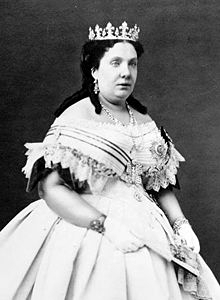
Napoleón (que en realidad de revolucionario tenía bien poco, aunque, paradójicamente, sus ejércitos sí traían las ideas de la Revolución Francesa) fue la primera sacudida grave que sufrió el sistema absolutista español. Pero el sistema aguantó bastante bien. Y eso a pesar de la escasa astucia política de un personaje como Fernando VII, uno de los reyes más mediocres (por no decir algo peor) que hemos tenido en este país. Sin embargo, mal que bien, Fernando VII se las arregló no solo para morir siendo rey de España, sino para asegurar la continuidad de su dinastía. No le salió gratis al país. Pero después de la primera guerra carlista y algunos contratiempos más, Isabel, una acorralada niña de 13 años, fue nombrada reina. Tal vez el rey respiró tranquilo desde el más allá (en sus últimos años de reinado, su única preocupación parecía ser evitar que el trono recayera en su hermano Carlos), pero el reinado de su hija no iba a ser un camino de rosas. Tuvo que enfrentarse, muy a su pesar, a todos los problemas que no supo ni quiso resolver su padre.

¿Y qué hizo esta pobre criatura? Pues primero dejarse manejar por todos, hasta que se hizo adulta, después buscar el gobierno menos malo (para sus intereses, que, desde luego, no eran los intereses de la nación), y finalmente vivir bien y disfrutar de su riqueza y posición, que para eso era la reina. Lo malo es que todos los chollos se acaban algún día y a Isabel su chollo se le acabó en 1868. Ese año, con bastante retraso respecto al resto de la Europa occidental (Rusia y la Europa del este es otro mundo), los españoles quisimos ser modernos. Para empezar nos inventamos una revolución. Y la llamamos “La gloriosa”, que es un nombre con garra. Y casi con eso ya nos dimos por satisfechos…

Nuestros vecinos, a la altura de 1869, ya estaban en plena revolución industrial, habían vivido tres oleadas revolucionarias, sin contar la revolución francesa, y tenían más que superado el Antiguo Régimen. Aquí aún estaba prácticamente todo por hacer, en lo político y en lo económico.

1868 era la oportunidad que medio país estaba esperando. Y fue una oportunidad perdida… “La gloriosa”, si se mira bien, no fue nada gloriosa. Se pegó la patada a una reina, pero no hubo ninguna limpieza a fondo, solo un ligero lavado de cara. Y eso fue por la misma razón de siempre, por la que “fracasan” todas las reformas “desde arriba”: porque realmente no están concebidas para ser un éxito, sino solo para “salvar los muebles” (y perdón por las comillas, pero creo que es la mejor manera de decirlo: este tema es muy complejo y yo solo pretendo hacer un rápido resumen). ¡Ojo! Con esto no quiero decir que no haya personas que seriamente lo intentan: ministros como Mendizábal, comoMartín de Garay, como Manuel Fernández Giménez, entre otros muchos, pero estas iniciativas siempre chocan contra el mismo muro: la intolerancia de las clases altas, de los que siempre han tenido el poder y la riqueza en sus manos y no quieren ceder ni un ápice de ambas cosas, les cueste lo que les cueste. ¿Es casualidad que todas las reformas agrarias hayan fracasado en España, que todos sus impulsores hayan caído pronto en desgracia? No, desde luego que no. Y con las reformas fiscales, hasta bien entrado el siglo XX, se podría decir otro tanto.

Pero este es un tema para tratar en profundidad. Lo que quiero indicar aquí es que, a pesar de la prometedora revolución de 1869, la situación en la España a la entrada del siglo XX no era radicalmente distinta a la situación de 1860, de 1830 y hasta de 1788, año en que empieza a reinar Carlos IV. Sí. Ya no hay absolutismo, desde luego, no hay absolutismo como tal. Pero eso no quiere decir que haya una democracia. Ni siquiera quiere decir que haya un régimen liberal según el modelo europeo.

Tenemos un parlamento, sí, pero ¿quién lo compone?: nobles y burgueses. Y burgueses ennoblecidos. Y nobles que empiezan a actuar como burgueses. Y cuando hablamos de burguesía, hablamos de la gran burguesía, como ya veremos.

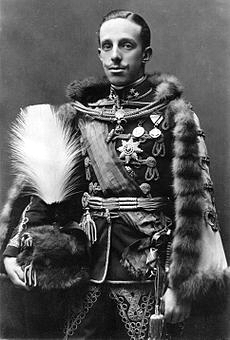
Y tenemos un sufragio, sí, pero censitario. Un sufragio que es solo para los que tienen propiedades, para los ricos, que deja fuera a la mayoría de la población. Si en 1868 el pueblo pide el sufragio universal (nada nuevo, en media Europa ya lo han conseguido a la altura de 1848), en 1874 el sufragio sigue siendo censitario, y eso a pesar de un rey “constitucional”, como Amadeo de Saboya y de un año de experiencia republicana, y todo para que al final vuelva un borbón, un hijo de Isabel II: Alfonso XII. Además hemos perdido las últimas colonias, no se ha dado nada parecido a una revolución industrial (solo ha habido un tímido desarrollo de algunas zonas del país) y se ha producido una nueva guerra civil: la tercera guerra carlista. Y eso sin contar los numerosos muertos en los cada vez más frecuentes conflictos sociales. En realidad, si se mira con lupa cada uno de los problemas políticos a los que se enfrentó Alfonso XII se llega a la conclusión de que son los mismos a los que se enfrentaron todos sus sucesores. Y esto se resume en una frase: falta de adecuación del sistema político a la nueva realidad económica y social. El rey, que teóricamente no gobierna, conserva en la práctica casi todo su poder. El parlamento, que teóricamente representa al pueblo, en la práctica solo representa a las clases privilegiadas. Los nobles, que teóricamente han cedido su lugar a los burgueses, siguen siendo los amos del país (para empezar son los amos de la mayoría de la tierra: de reformas agrarias, nada de nada…), los burgueses, los pocos burgueses españoles, que teóricamente deberían ser la clase menos conservadora, más abierta socialmente, con una mentalidad capitalista y pragmática, en la práctica se comportan como simples nobles ambiciosos, tan conservadores y tan clasistas como los nobles pero más avaros que ellos. Nadie, ni rey, ni nobles, ni burgueses (ni desde luego, la iglesia, el otro puntal del Antiguo Régimen) tienen la menor intención de preocuparse por el pueblo, el gran abandonado.

Pero el pueblo poco a poco va cobrando conciencia de su situación. Y esta situación no va mejorando, sino todo lo contrario: el sistema capitalista avanza de modo lento pero inevitable. Ese avance empobrece aún más a los campesinos y crea una nueva clase social, el proletariado. Y esto es algo que parece que nadie lo ve. Fernando VII quería borrar de un plumazo las Cortes de Cádiz, olvidar los años de vacío de poder y los efectos económicos de la invasión francesa (efectos devastadores: la pérdida de las colonias americanas, entre ellos). Él creía que “Todo podía seguir como si nada hubiera pasado”. Eso es pretender negar la ley de la gravedad. Pero 100 años después nadie ha tomado nota. Los que se reparten el pastel siguen como siempre: peleándose por ver quién tiene el trozo más grande. No parecen escuchar el tumulto que se está formando al otro lado de la pared, fuera, en el frío glacial de la noche. Tal vez piensan que las antorchas se apagarán pronto. O que se dirigirán hacia otro sitio. Tal vez piensan que “todo puede cambiar para seguir igual” (como pensaba el Príncipe de Salina, el protagonista deEl Gatopardo, que no dudaba en sustituir a un rey por otro, porque “al fin y al cabo es un rey”). Esta vez, pese a los denodados esfuerzos de Cánovas, de Sagasta, de otros hombres inteligentes y muy útiles para el poder (al que sirven y del que viven, y muy bien, por cierto; Cánovas, por ejemplo, era consejero en las principales empresas de ferrocarriles del país, ¡ya hablaremos de ello!), el sistema va a caer.

El sistema va a caer porque deja fuera al noventa por cien del país. El sistema va a caer porque el capitalismo pide libertad económica, grandes espacios, uniformización, mercado único, capacidad de compra, alto consumo, jornadas de trabajo extenuantes y salarios “competitivos” (y los necesarios cambios familiares: curiosamente, los primeros defensores de la incorporación de la mujer al trabajo son los patronos de las fábricas, no sus maridos, que se oponen encarecidamente a ello y se quejan cuando les dejan). El capitalismo va contra los censos, los señoríos, los mayorazgos, las tierras de “manos muertas”, el capitalismo es ateo y no hace distinciones: la dignidad social la da el dinero, y todo lo demás importa muy poco si se está arruinado. El sistema va a caer porque su tiempo ha concluido.

Pero los que se benefician de él van a pretender alargarlo, mantenerlo con vida, aunque lo vean agonizar. Y luego, incapaces de reaccionar, van a soñar con el mito de El Cid. Van a querer que gane batallas después de muerto. De otro modo no se puede entender la hostilidad de la clases altas hacia la Segunda República. Su negativa a cualquier intento de reforma agraria o fiscal. Su incapacidad para entender el comunismo, el anarquismo, el cooperativismo. Cualquier ideología o movimiento social emergente es considerado como algo absolutamente nocivo. Incluso el derecho a la educación del pueblo es negado hasta el último minuto. Y entonces se agarran al machismo, y cuestionan hasta el final el derecho a la educación de la mujer (que no podrán entrar en la universidad hasta 1918, o su derecho a voto, que no se aprobará hasta 1931). Cualquier medida que sea vista como “un avance” será automáticamente estigmatizada. Y un profesor humanista y laico será tratado de igual modo que un terrorista. Para ellos es lo mismo. Si se cede en algo (derecho a la huelga, por ejemplo), es a la fuerza, porque no hay más remedio. Pero ellos siempre tienen un as en la manga. Y llevan jugando a ese juego muchos años. Se saben todos los trucos. Los ministros conservadores de Isabel II consentían en pactar leyes progresistas con los liberales, pero luego, bajo mano, se aseguraban de tener el control de todos los principales ayuntamientos del país. ¿Y para qué sirve una ley si nadie la aplica? Pero en el peor de los casos, aunque no haya más remedio que aplicarla, entonces aún tienen otro as en la manga: la violencia.

¿Cuántas veces los políticos republicanos españoles denunciaban que los matones del cacique amedrentaban a los campesinos u obreros? Vicente Almirall, político nacionalista catalán, relató casos en que era la misma Guardia Civil la encargada de dar una paliza a los que pretendían ejercer su derecho al voto (¡mucho después de 1890, cuando el sufragio universal masculino ya había sido definitivamente aprobado!). Pero a veces no hacía falta ni eso: bastaba con vaciar la urnas y quitar los votos que no gustaban. Dos partidos se repartían el poder. Ahora me toca a ti y luego me toca a mí. Todo es legal y todo el mundo aplaude. Los parlamentos van y vienen y todo está bajo control. ¿No es perfecto? Desde luego. Para los que están dentro… ¿Tan distinto es esto de las intrigas palaciegas del Antiguo Régimen? Y mientras el capitalismo arrasa nuevos continentes, mientras en Europa nace una nueva sociedad, una nueva cultura. Los agricultores se convierten en pequeños empresarios. Los obreros van adquiriendo derechos. Las mujeres se emancipan. La tecnología y la ciencia ocupa el lugar de la religión.

España, en cambio, se cierra. Machado y otros lo ven y sufren. “Que inventen ellos”, dicen con ironía. Pero al rey solo le preocupan sus amantes y a sus ministros solo les preocupa conservar el poder el mayor tiempo posible. Y luego, cuando les dan la palada, un ejército de “cesantes” abandona el ministerio. Aunque siempre están los que creen que pueden burlar al destino. Como el Conde de Romanones. Siempre está el que se permite chulear delante de sus adversarios, tan seguro está de ser intocable. “Haga usted las leyes”, les suelta, “que ya haré yo los reglamentos”. Y cayó. Él también cayó. Aunque, claro, cuando uno cae de tan alto siempre puede luego ocuparse de sus negocios, y dedicarse a escribir sus memorias, que eso queda muy bien. Cuando ya no tienes ningún as en la manga aún puedes hacer una última jugada: reservarte un buen lugar en la historia.

[Aclaración al lector: dado que el periodo de tiempo que pretendo estudiar (de la decadencia del absolutismo a la democracia actual) abarca doscientos años, he tenido que pasar de soslayo o incluso obviar en esta primera parte algunos aspectos y sucesos históricos que serán tratados con más detenimiento en la segunda parte, que contará así mismo con un apéndice documental]

Haga usted las leyes y déjeme a mí los reglamentos (II) Publicado por Alfonso Vila Francés

Arte y Letras, Historia
Haga usted las leyes y déjeme a mí los reglamentos (II)

Publicado por Alfonso Vila Francés
http://www.jotdown.es/2013/01/haga-usted-las-leyes-y-dejeme-a-mi-los-reglamentos-ii/


(Viene de la primera parte)

2. El rey ha muerto ¡Viva el rey! (España 1936-¿?)

La Guerra Civil merece un artículo aparte. Aquí nos interesa una consecuencia política: la desaparición de la Falange y del carlismo y la acumulación de todo el poder por parte de Franco.

¿Desaparición de la Falange y del carlismo? Sí. Eso he dicho. La Falange fue flor de un día. Tuvo su momento de gloria en los primeros momentos de la Guerra Civil. Luego le pasó lo mismo que a los carlistas, a los monárquicos, a los políticos de la CEDA, a la derecha de toda la vida: se los tragó Franco. Los engulló literalmente. Los fagocitó y desnaturalizó. Los borró del mapa. Algunos sin resistencia. Otros porque no tenían más remedio. Otros a la fuerza. Al final todos acabaron marcando el paso de Franco, bailando su macabro pero bien organizado pasodoble. En eso el mérito no fue solo de Franco, desde luego, sino de algunos muy leales colaboradores, como Serrano Suñer. Pero Franco fue el que se llevó los aplausos y el premio gordo.

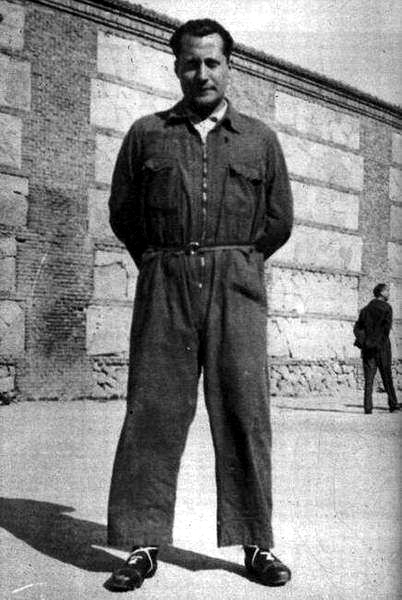
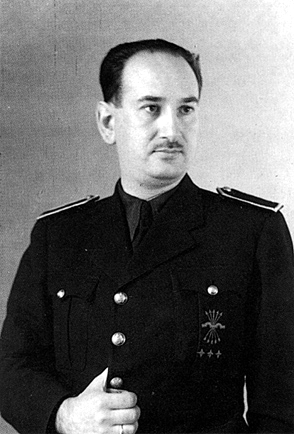
Sanjurjo y Mola se mataron convenientemente en un avión. (¡Cuidado!, no digo que Franco los matara, digo que le vino de perlas que ocurrieran esos accidentes). Los rojos le hicieron el favor de fusilar (pero sobre todo de tener retenido) a José Antonio Primo de Rivera. Luego Franco metió en la cárcel a Manuel Hedilla, su sucesor (pero no sin antes haber intentado que la Falange no conociera el destino de su líder, para tenerla inmovilizada, “a la espera”). Para completar la jugada, impuso un nuevo jefe (el más mediocre y manejable que encontró, según Dionisio Ridruejo) y corrompió a todos los que pudo. Con los cuadros de mando bajo control, las bases eran totalmente inofensivas. Pese a todo algunos prominentes falangistas protestaron y le plantaron cara, como el ya citado Dionisio Ridruejo, que se atrevió a decir que la Falange era una simple marioneta y que el régimen “ya solo sobrevivía como tinglado” (y eso que estábamos aún a principios de los años 40: el tinglado iba a dar mucho de sí…).

Con los carlistas hizo algo parecido. No fueron un enemigo tan poderoso como la Falange. Casi bastó con desterrar a su jefe: Fal Conde. La mayoría de sus cabecillas abandonaron pronto sus reivindicaciones políticas. Todas ellas. Y lo mismo pasó con la inmensa mayoría de los monárquicos. El rey estaba muy lejos. En suiza. El que les había salvado el cuello era Franco. Y mejor Franco que Stalin, desde luego, eso ni se discutía. Franco había salvado, de paso, al país entero. ¿Cómo no iban a estarle agradecidos?

¿Y la antigua nobleza? ¿Y el clero? Pues lo mismo. Las matanzas de la Guerra Civil les habían asustado. Por primera vez estaban dispuestos a ceder, a perder poder. A entenderse con las clases trabajadoras. Qué remedio. Mejor eso que la revolución.

En resumen, la guerra la perdió mucha gente y la ganó Franco. Él, que había empezado siendo uno más de los generales sublevados, que se había sumado a la rebelión en el último momento, y cuyos méritos bélicos al principio de la guerra fueron más que discutidos (véase lo que dijo el conde Ciano, yerno de Mussolini: “Franco o no quiere ganar la guerra o no sabe cómo hacerlo”), acabó la guerra convertido en jefe del ejército, jefe del Estado y caudillo de España por la gracia de Dios. A la altura de 1939 ya acumulaba todos los poderes posibles (hasta el judicial) y actuaba en la práctica como un rey absolutista, y como tal justificaba su poder ante Dios y solo rendía cuentas ante Él.

Pero ningún poder absoluto es realmente absoluto (y si no que se lo digan a Stalin, que tuvo que arremeter contra sus propios funcionarios, que malinterpretaban las ordenes, o no las cumplían o no eran lo suficiente rápidos o eficientes, y con esto no lo justifico: solo digo que su autoridad real se veía limitada por el propio sistema que lo encumbraba como un Dios). Franco tenía que ceder una parte de los beneficios que generaba el usufructo del poder a las diversas familias del Régimen, porque sus colaboradores eran sumisos, pero no eran tontos. Y eso, hay que decirlo, lo hizo muy bien. Sabía repartir por igual los castigos y los premios. Sabía tenerlos a todos igual de contentos e igual de disgustados. Así no había problema. Se pueden poner muchos ejemplos. Pondré uno: el caso Matesa. En ese episodio tan gracioso y tan provechoso se ve perfectamente la habilidad de Papa Franco para hacer la paz entre dos hijos díscolos, castigando a ambos (pero solo lo justo, y a los dos en igual medida) y, ya de paso, indultando rápidamente al principal acusado, el empresario, Juan Vilá Reyes, y condonándole el pago de la multa (que era inmensa, aunque menos inmensa del dinero del Estado que había estafado) y dejando claro así quien era el que mandaba.

Y lo dejó tan claro que se permitió el lujo de morirse de viejo, en su propia cama, después de unos últimos años, vamos a decir, “un poco malos”, aunque él se fue tranquilo, convencido de que todo iba a seguir más o menos igual (en eso se parece a Fernando VII, que pensaba que el absolutismo continuaría después de él). Cuando se tiene todo en la vida, se quiere tener todo en la muerte, podríamos decir, pero las cosas no estaban tan bien atadas como pensaba Franco y algunos (algunos pocos) franquistas. Suárez y el rey pronto empezaron a hacer lo contrario de lo que “debían hacer”. La iglesia, tan buena aliada en otros tiempos, hizo algo más de lo que llevaba haciendo últimamente: ahora ya no eran unos pocos “curas rojos”, ahora toda la institución le dio la espalda a un Régimen huérfano y débil. Un Régimen que se hundía invocando al mito del Cid (la historia siempre se repite, porque los hombres son en general muy desmemoriados, y a los que tienen memoria los fusilan rápido…). Y así podríamos continuar durante páginas y páginas. En 1833 pasó lo mismo. Los más avispados saltaron del barco a tiempo. Otros decidieron hundirse con él. En poco tiempo el mar se tragó los restos del naufragio y todo el mundo siguió con lo suyo. Paz, trabajo, y ya que nos la dan, un poco de libertad. ¿Hace falta más? Pues sí. Unas leyes. Un sistema político. Un objetivo para la nación (entrar en Europa, ese punto se solucionó pronto, España quería otra vez ser moderna, ser como sus vecinos, abrirse al mundo, y lo más rápido posible, para recuperar los muchos años de retraso). Por suerte las cosas fueron bien. Y que conste que no fue nada fácil. En un momento tan importante y delicado para el país, se tuvo la suerte de contar con un grupo de hombres inteligentes y valientes. ¿O fue algo más que suerte? ¿Acaso los políticos y las mentes pensantes de entonces eran de otra pasta, de una clase de pasta que por desgracia ya no abunda? (Ahí queda la pregunta, que cada cual se la responda en la intimidad).

Pese a todo faltó solucionar algunas cuestiones. Es normal. Siempre quedan cabos sueltos.

Entonces se pensó que lo importante ya estaba hecho (y lo estaba) y se pensó que las generaciones futuras se encargarían de los últimos remaches y retoques del edificio. Luego era solo cuestión de no descuidar el mantenimiento…

3. Apéndice documental

A. Muerte en la fábrica. Las condiciones laborales. El trabajo infantil y femenino

“He aquí la causa de esa enfermedad, que comenzando por una tos cada vez más fuerte y más difícil, llega a tener todas las apariencias de una tisis pulmonar, siendo llamada por los médicos de los distritos manufactureros tisis algodonera, o pneumonía algodonera, nombres significativos de una enfermedad cruel, cuyas víctimas van a morir en los hospitales en la flor de la edad; porque como esta operación no exige fuerzas musculares, se encarga a las mujeres y a los jóvenes de pocos años”.

J. Salarich, Higiene del tejedor (1858)

Hay que recordar que la primera legislación en España sobre el trabajo infantil y femenino data de 1900. En el primer artículo de la ley del 13 de marzo de 1900 se dice que “los menores de ambos sexos que no hayan cumplido los diez años no serán admitidos en ninguna clase de trabajo”. Pero poco después añade: “A los niños que acrediten saber leer y escribir se les admitirá en la fábrica un año antes de la edad marcada por la presente ley”. Es decir, que un niño de nueve años estaba legalmente capacitado para trabajar en una fábrica. Pero esta ley es un avance para la época (aunque llegue con retraso), porque por primera vez se pretende regular el trabajo infantil, así como el derecho de la mujer embarazada a un periodo de descanso después del parto (de seis semanas) y una baja por maternidad a partir del octavo mes de embarazo. Antes cada patrono decidía por su cuenta, teniendo en cuenta que el vacío legal era absoluto.

B. Los que velan por el bienestar de la nación: el pucherazo

“Hubo, en efecto, mesas constituidas a la una de la mañana, custodiadas por un grupo de matones para impedir acercarse a los enemigos y dar tiempo a la falsificación del acta. En otros lugares, como en Oza en 1886, se cambió a última hora el lugar destinado al colegio electoral. También se instalaron urnas en lugares estratégicos para disuadir al elector desafecto: bien en un hospital de epidémicos —como ocurrió en Madrid en la elección de 1886—; o bien en un tejado; o bien en una cuadra u otro lugar maloliente (…) En 1891, en una de las secciones de Murcia, el presidente ordenó que se votase por la ventana para así sustituir cómodamente las papeletas (…) En 1886 funcionarios madrileños votaron varias veces suplantando otros nombres”.

José Varela Ortega, Los partidos políticos. Partidos, elecciones y caciquismo en la restauración (1875-1900),2001

Sobran comentarios… Pero ya puestos a descubrir el truco, no puedo resistirme a mencionar dos casos que citaVicent Almirall, el lúcido político catalán. El primero se refiere a un pueblo gallego. Colocaron la mesa electoral en un pajar, al que solo se podía subir por una estrecha escalera, y el primero que subió recibió un buen mamporrazo al asomar la cabeza, después de lo cual los otros votantes se abstuvieron de ejercer su derecho. Y el otro caso le atañe directamente a él, pues en sus escritos refiere que había comprobado cómo su propio padre, que ya llevaba muchos años muerto, acudía fielmente a participar en todas las votaciones que se iban produciendo. Eso sí que es poder, amigos míos, hacer votar a los muertos…

C. Cinismo administrativo: cómo prohibir algo permitiéndolo

El Fuero de los Españoles, Ley Fundamental de 1945, decía:

Artículo 12.- Todo español podrá expresar libremente sus ideas mientras no atenten a los principios fundamentales del Estado.

Artículo 33.- El ejercicio de los derechos que se reconocen en este Fuero no podrá atentar a la unidad espiritual, nacional y social de España.

A esto hay que sumarle el artículo 2, en el que se afirma tajantemente que: “Los españoles deben servicio fiel a la Patria, lealtad al Jefe del Estado y obediencia a las leyes”. También, un poco más abajo, se dice que “Los españoles podrán reunirse y asociarse libremente para fines lícitos y de acuerdo con lo establecido por las leyes” (subrayo lo de “lícitos”, que es un matiz importante).

Es decir, que menos atentar contra la unidad nacional, espiritual y social, menos decir algo que vaya contra los principios fundamentales del Estado, menos ser infiel a la patria, ser desleal al Jefe del Estado y ser desobediente ante las leyes (aunque no las votado ni te hayan pedido tu opinión para nada) y, por supuesto, menos reunirte para fines “ilícitos”, puedes hacer y decir lo que te dé la gana. ¡Viva la libertad!

D. Elogio de la mediocridad

Cito textualmente a Paul Preston, en su libro El gran manipulador:

“El ambicioso Arrese era un lacayo servil, por lo que Franco lo apreciaba mucho. Cuando fue nombrado ministro secretario general de la FET de las JONS, los seguidores de José Antonio se quedaron con la impresión de que su mayor cualificación para el cargo había sido su mediocridad. Dionisio Ridruejo le dijo delante de un grupo de altos cargos falangistas: ‘No te hagas ilusiones, Franco te ha nombrado porque cree que eres el más dócil e insignificante de los falangistas que tiene a mano y le más fácil de manejar’”.

(Nota: no sabemos qué le contestó Arrese, pero podemos suponerlo. Pero lo cierto es que al tal “lacayo” la cosa no le fue mal: además de ministro secretario general del Movimiento , fue ministro de vivienda y procurador de las Cortes hasta 1977. Teniendo en cuenta que empezó su carrera política en 1941 podemos decir que no le fue nada mal.)