ANÁLISIS ECONÓMICO Y EMPRESARIAL
Twitter: de bastión de la libertad de expresión a censor global
Es necesaria y hay demanda de una plataforma libre, abierta y neutral que Twitter cada vez más está dejando de ser
Barcelona, 21 de julio de 2017 (13:08 CET)
El 17 de junio, a las 10 de la mañana hora de Doha (07:00 GMT), la cuenta de Twitter del canal árabe de Al Jazeera, una cuenta verificada con más de once millones de seguidores, fue suspendida debido a una campaña organizada. Los ingenieros de Al Jazeera Arabic que estaban en comunicación con Twitter dijeron que hubo "ataques masivos" denunciando la cuenta, lo que condujo a su algoritmo a suspenderla temporalmente. Twitter no respondió a la solicitud de comentar el incidente.
Ha sido un caso sonado de un patrón ya bien establecido: Twitter recibe un número alto de quejas al mismo tiempo, denuncias masivas de una cuenta, y la cierra automáticamente. Sin advertencias, sin verificaciones, sin garantía alguna para el usuario.
En febrero de 2017 Twitter declaró: "Continuamos trabajando en nuevas maneras de dar a la gente más control sobre lo que ve en Twitter. La semana pasada introdujimos una mejora en la denuncia de tweets abusivos que da a las personas que sufren acoso más formas de denunciarlo.”
"Cualquier grupo organizado puede conseguir que Twitter trabaje para él censurando a otras personas"
El resultado ha sido que cualquier grupo organizado puede ahora conseguir que Twitter trabaje para él censurando a las personas que quiera silenciar, etiquetando sus tweets como "sensibles" o "potencialmente ofensivos", suprimiéndolos, o incluso lograr que sus cuentas sean ocultadas, suspendidas, o cerradas. Es suficiente para ello lanzar un ataque organizado que denuncie una cuenta como "sensible", "ofensiva", "perjudicial", "spam", y Twitter diligentemente la censurará.
Debido al secreto que rodea los criterios y algoritmos de Twitter; la imprecisión de las reglas que publica, tan vagamente redactadas que permiten castigar a cualquier persona en cualquier momento por cualquier cosa; la ausencia de procedimiento alguno para que los castigados se defiendan; y la respuesta automatizada que Twitter da de "violar las reglas" sin ninguna explicación sobre qué regla concreta se ha violado supuestamente, cuándo, y cómo; Twitter se ha convertido en un paraíso de censura burocrática, una mezcla del Proceso de Kafka y el 1984 de Orwell que el Partido Comunista Chino adoraría disfrutar: cualesquiera opiniones que un grupo organizado quiera borrar basta con que las moteje de "discurso de odio", "hostigamiento", o "abuso", y tales crímenes de pensamiento son diligentemente purgados junto con sus autores.
Tres casos:
- Alexandra Brodsky, activista e investigadora del Centro Nacional de Mujeres de la Facultad de Derecho de Yale, fue acosada por ser judía y tras ello su cuenta fue suspendida en enero por supuestamente "violar las reglas". Sólo la pudo recuperar después de que mucha gente presentara una queja directamente al CEO de Twitter Jack Dorsey, y de que la prensa destacara el caso. Fue preciso un alto nivel de protestas públicas.
- Maiol Sanaüja, destacado independentista en oposición al gobierno de Cataluña, con más de 130.000 seguidores, vio su cuenta suspendida en marzo pasado, y ni las protestas de sus seguidores ni las denuncias de la prensa han sido atendidas por Twitter, a quien no le importan nada en absoluto los extranjeros que censura.
- Una cuenta anónima de Twitter responde con duras palabras al Partido Nazi Americano y es suspendida, lo que induce a Jamelle Bouie a enviar un tweet: "Me encanta que @Twitter se haya comprometido a hacer que Internet sea seguro para los verdaderos nazis.”
Los gobiernos de tendencia autoritaria han aprendido con rapidez a pisotear la libertad de expresión en Twitter, como Sananand Dhumme escribió en The Wall Street Journal sobre la India: "El BJP parece que, como mínimo, alienta tácitamente a las turbas que linchan en los medios de comunicación social acosando a todo periodista que se sale de la ralla. Ningún otro partido político importante ha nombrado a trolls en puestos de responsabilidad.”
"Los gobiernos de tendencia autoritaria han aprendido con rapidez a pisotear la libertad de expresión en Twitter"
Las autoridades públicas que organizan el acoso y la censura en las redes sociales suelen hacerlo discretamente, si bien a veces la vanidad chulesca les puede. Joan Maria Piqué, Jefe de Comunicación y Relaciones Públicas Internacionales del Gobierno de Catalunya con Puigdemont, y antes Jefe de Prensa de Presidencia con Mas, en febrero pasado se jactó en Twitter de la suspensión de cuentas denunciadas por su "comportamiento abusivo" con un alarde macarra: "Seguid así, burros". Como indica Sarah Kendzior, tal es la visión del mundo de un autócrata,demostraciones flagrantes de poder que proclaman: "Sabemos que sabes lo que hicimos, y no hay nada que puedas hacer al respecto.”
Twitter en otros tiempos se proclamaba "el ala de la libertad de expresión del partido de la libertad de expresión", pero ahora dice "Hacer de Twitter un lugar más seguro es nuestro enfoque principal". ¿Un lugar seguro para quién? Es a los censuradores, a los sectarios, y a los matones, a quienes sirven las nuevas herramientas para la opresión que Twitter ha desplegado, que les permiten suspender usuarios sin advertencia ni recurso, sin visibilidad alguna sobre cómo se toman esas decisiones, sin poderlas recurrir ni contar con mecanismo alguno de recuperación.
Los gobiernos de tendencia autoritaria en todo el mundo ya saben que las herramientas de Twitter permiten a sus mamporreros, tanto humanos como robots, conseguir que cualquier crítica que no les guste sea simplemente borrada de la existencia. Quienes publican comentarios críticos sobre cualquier autoridad se arriesgan a ser suspendidos en Twitter y bloqueados de inmediato, y a que todos sus mensajes sean suprimidos, con la facilidad y discreción que Twitter provee con sus propias herramientas de eliminación del discurso crítico a todo Gobierno y grupo organizado: un ataque masivo organizado de denunciantes es todo lo que necesitan.
"Joan Maria Piqué, que trabaja con Puigdemont, alardea de forma macarra: 'seguid así, burros'"
Si no está dispuesto a abandonar Twitter por completo, o autocensurarse para evitar ser denunciado y aniquilado, hay algunas medidas que puede tomar para proteger su cuenta:
- Bloquee a cualquiera a la menor señal de ser un sectario que odia lo que usted dice. No entable ninguna conversación con esas personas, se trata de denunciantes potenciales que le dan cuerda para mejor ahorcarle motivando a sus conmilitones a denunciarle masivamente a Twitter.
- Consiga seguidores de cuantos más países mejor, diversifique los temas sobre los que publica, y así sus denunciantes no alcanzarán el porcentaje de sus seguidores necesario para que Twitter cierre su cuenta.
Sin embargo, si Al Jazeera ha sido cerrada, nadie está a salvo: si a pesar de todo Twitter cierra o suspende su cuenta, lea atentamente la sentencia Pruneyard Shopping Center v. Robins del Tribunal Supremo de los Estados Unidos de 1980, y especialmente diversos Votos Particulares en esta materia de los Magistrados Bader Ginsburg, Kagan y Alito, y considere demandar a Twitter. Un patrón de conducta sostenido de censura y arbitrariedad está abocado a demandas judiciales, con grave riesgo de perderlas. La violación sistemática por parte de Twitter de los principios de interdicción de la arbitrariedad y "no hay crimen ni pena sin norma previa, escrita, definida, estricta" no prevalecerá.
De todos modos, convertirse en una herramienta para la censura arbitraria tiene un precio. Es necesaria y hay demanda de una plataforma libre, abierta, y neutral que Twitter cada vez más está dejando de ser, y por ello la destrucción creativa del capitalismo probablemente promoverá otras empresas que cumplan esta tarea, hundiendo Twitter en la irrelevancia de ser una herramienta sólo válida para los exabruptos de Trump, la censura sectaria, y las fotos de lindos gatitos.
Este artículo se publicó originalmente en inglés en Busines Insider, con el título Twitter has gone from bastion of free speech to global censor.Este artículo no refleja necesariamente la opinión del consejo editorial o de Economía Digital y sus accionistas.
Sunday, 21 May 2017

Sunday, 14 May 2017
El régimen franquista fue colaboracionista del PEOR GENOCIDIO de la historia, el HOLOCAUSTO JUDÍO
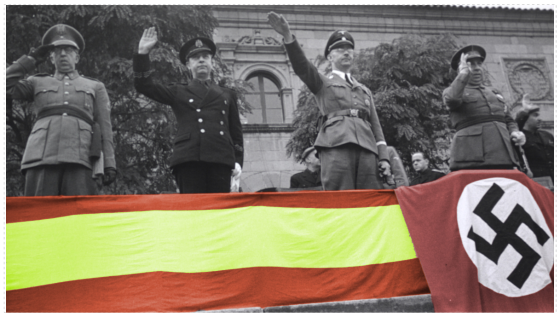
Himmler en Barcelona, acompañado de militares franquistas, en 1940
El régimen de Franco tenía conocimiento de los preparativos del Holocausto según una nota del Archivo General de la Guerra Civil de Salamanca. Hay abundante información de que el régimen conocía el exterminio en ciernes, los judíos convertidos en el centro de atención de la maquinaría criminal nazi. El régimen tenía embajadas en casi los países ocupados por los nazis y sus diplomáticos informaban al ministerio de Asuntos Exteriores, Serrano Suñer o después Franciso Gómez Jordana, de las penalidades, crímenes y atropellos cometidos por los nazis contra los judíos.
El régimen franquista ordenó urgentemente en 1941 a los gobernadores civiles elaborar una lista de los judíos que vivían en España. Para “Proteger al Nuevo Estado de la posible actuación de estos peligrosos individuos. ¿No son acaso los judíos y los masones los enemigos fundamentales del Nuevo Estado?”. José Finat Escrivá de Romaní, embajador de Franco en Berlín, entregó en persona a Himmler su censo de 6.000 judíos. Cuando el alemán Reinhardt Heydrich reunió a los mejores expertos en matanzas para poner en marcha la “solución final, el Holocausto judío”, se recordó este censo. En la Embajada alemana en Madrid los tenían localizados. Su destino estaba claro, cuando España entre en la guerra serán un buen regalo para los nazis.
Cuando Hitler cayó, los franquistas borraron todos los indicios comprometedores de su colaboración en el Holocausto, el Archivo Judaico fue destruido. La propaganda franquista de que el régimen había contribuido a la salvación de miles de judíos era falsa, el dictador tuvo la tentación de contribuir a acabar con el “problema judío” en Europa. Fueron diplomáticos españoles a título individual quienes protegieron judios. Bernardo Rolland de Miota, cónsul general en París, contra las órdenes del embajador Lequerica y del ministro Serrano Súñer, actuó a favor de 2.000 judios en su consulado. Serrano Suñer le hizo pagar por su desobediencia. Bernardo fue declarado por la Fundación Wallenberg “justo entre las naciones”, un título al que se harán acreedores otros diplomáticos españoles, como Sebastián de Romero, Eduardo Propper, Julio Palencia, Ángel Sanz Briz o Carmen Schrader.
La obra “Los últimos españoles de Mauthausen” de Carlos Hernández de Miguel, cuenta que Franco conocía la magnitud del genocidio judío: “Es una absoluta falsedad que el régimen de Franco tratara de salvar a los judíos de una muerte segura en los campos nazis. Ni tan siquiera puede ser considerado como un cómplice pasivo. Fue cómplice activo y necesario y por tanto, coatuor de la deportación de los judíos. Cuando alguien tiene la capacidad de salvar a otro ser humano de una muerte segura y no lo hace se convierte en cómplice”.
Franco ignoró el ofrecimiento de las autoridades alemanas, en Agosto de 1940, para rescatar a los miles de “rojos españoles” prisioneros en campos de concentración franceses. En septiembre, Serrano Suñer se desplazó hasta Alemania para reunirse con Himmler. Ese mismo día Alemania emitió la orden de trasladar a 9.000 españoles a campos de concentración”. Aunque los nazis les trataban con especial dureza por su condición de “apátridas”, Suñer no movió ni un dedo por su suerte. Cerca de 6.000 murieron ejecutados o a causa de las malas condiciones de vida y salubridad que padecieron. Franco mostró una total indiferencia por la suerte de los 4.500 judíos españoles que había en países ocupados por el nazismo así como por los 175.000 sefardíes de origen español.
Documentos originales: Diario16 (Ricardo Angoso, Cárlos Hernández), Público (Alejandro Torrús), El Plural, (Marisu Moreno), El País (Jorge M. Reverte). Deportados
Viva la República Española. Por el reconocimiento de los Soldados Republicanos Españoles, que sufrieron ejecuciones y exterminio tras su heroico combate contra el franquismo. En Europa se les honra por su lucha contra el nazismo, pero en España siguen olvidados, FIRMA Y COMPARTE AQUÍ
Friday, 21 April 2017
“Calamity came upon Spain from the skies / and my eyes pour forth their stream of tears.”
Americo Castro was very much of the belief that Spaniards where not such, but just Jewish or Muslims of former Al-Andalus or Sepharad. His theory is rich with examples which will be great to explore our ongoing tradition of intolerance and persecution versus the alternative of conviviality and respect we can also produce.
Learning from our past and history is including the lives of so much Spaniards then Al-Andalusians or Sephardi.
Here is one of such:
Learning from our past and history is including the lives of so much Spaniards then Al-Andalusians or Sephardi.
Here is one of such:
Abraham ben Ezra
Another poet whose life was marked by exile was the last of the great Sephardic poets, Abraham ben Ezra (1093–1167, no relation to Moses). He was a friend to Judah Halevi. Although Abraham was twenty years younger than Halevi, his son married Halevi’s daughter. Like Solomon Gabirol, Abraham was a Neoplatonist, and this view influenced some of his poems, such as this one, which uses Gabirol’s phrase “fountain of life”:
Sent down from a luminous fountain of life, . . .Why were you ushered into the world and then in the dark of the body imprisoned?
His poems include a moving memorial to Jewish life in Muslim Spain, lost to the intolerance of Islamic fundamentalism, the “Lament for Andalusian Jewry,” which begins:
“Calamity came upon Spain from the skies / and my eyes pour forth their stream of tears.”
Tuesday, 18 April 2017
BBC News The men who left the Valleys to fight fascism in Spain
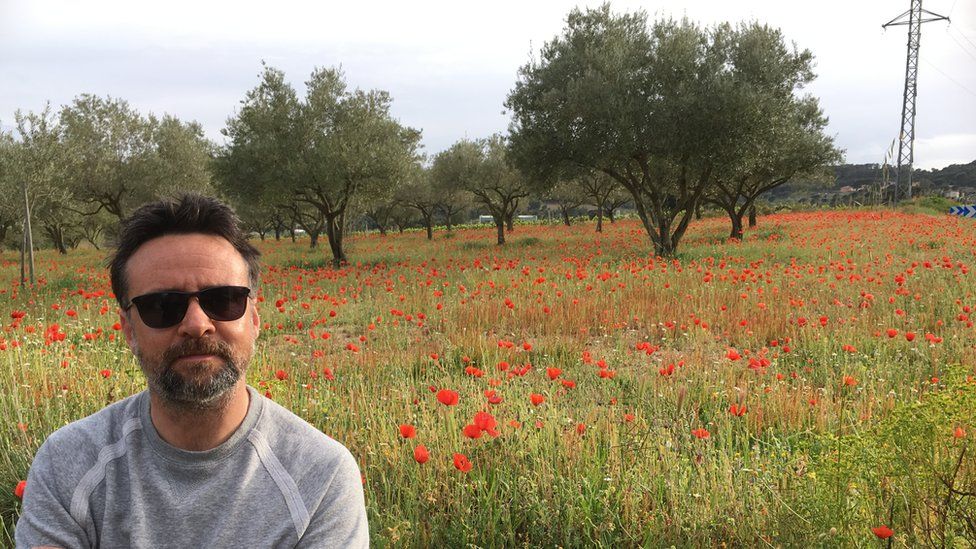
Leaving a note simply saying "gone to Spain", a Merthyr Tydfil man left his family to go and fight General Franco and the rise of Fascism in 1937.
Timothy Harrington trekked through the Pyrenees, one of 4,000 British volunteers to join the cause.
Now, 80 years after he left wife Sally and five children, his grandson - actor Richard Harrington - has retraced his steps.
His diary forms the basis of the BBC documentary My Grandfather's War.
Such disappearances to join the International Brigade were not uncommon across the South Wales Valleys, where the plight of the democratically elected left-wing government in Spain resonated with the Labour movement of the mining and steel-working communities.
Research for the programme showed other instances, such as one woman waking up to find her husband had left, with a note saying "gone to the grocery shop".
The coup d'etat which carried General Franco to power in Spain and sparked the civil war arose because the land-owning class in Spain objected to the republican government's plan to redistribute farming land to the poor.
Unthinkable to the fascist parties and the Catholic Church, they launched an attack on the republican government. The war would claim more than 500,000 lives.
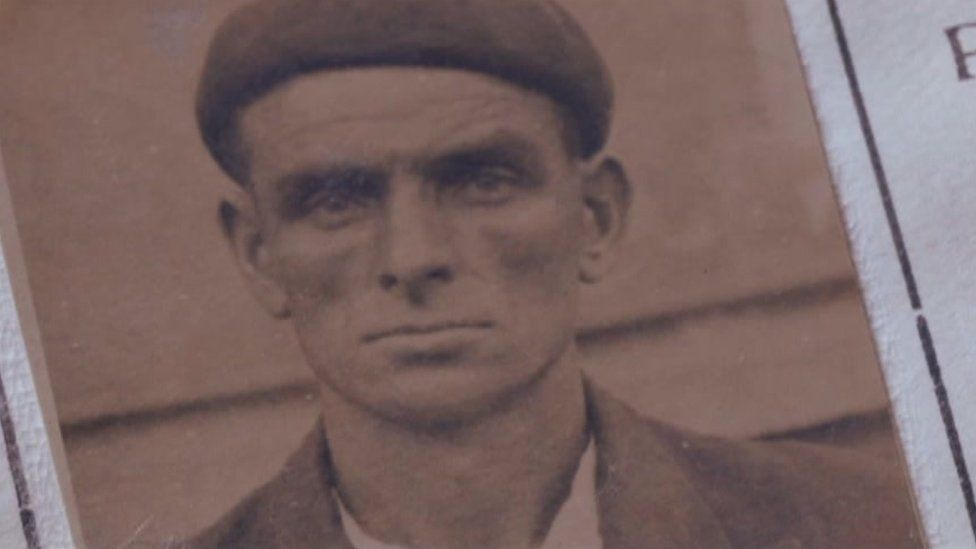
The British government was so keen to remain as far away from the war as possible, it made it illegal for anyone to travel to Spain and lend their services to the republicans.
They also sent warships out to sea to intercept any supplies which may have been on their way to the left-wing forces.
Yet miners of Wales risked their lives to travel to Spain and fight the spread of fascism.
"We are going on a jolly weekend to Paris," one of the Welsh men who travelled to Spain told a policeman, who questioned him and his friends as they left Britain via train.
"You better be back here on Monday or you will be in trouble," replied the policeman.
The men did go to Paris but, needless to say, they were not back by Monday.
Timothy Harrington and his 4,000 comrades who travelled to Paris were met there by communist agents, who would organise accommodation and protection from French spies.
They were transferred to Perpignan in the foothills of the Pyrenees where an old smugglers pass led them over the border without being detected by nationalist forces.
Once there, Timothy Harrington and his comrades joined the International Brigades, a group of about 30,000 foreign fighters from all over the world.
These men were given basic training in a town called Figueres. But thanks to the British-imposed embargo, equipment was basic and often out of date.
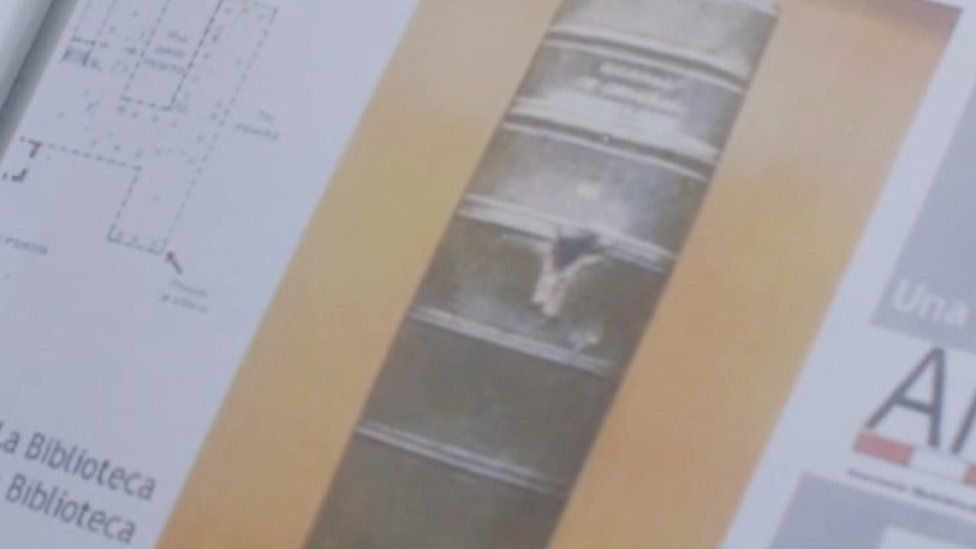
Harrington had been in Spain for four days before he was sent to Madrid to defend the city on 3 June 1937. The bullet holes from the battle can still be seen today.
Short of proper defensive support, books from the library were used to fend off the spray of bullets.
"Literature saved their lives," Richard Harrington says in the documentary.
After a 10 day battle, Timothy Harrington moved out of the city, as the republicans sought to cut off supplies to the fascists in the west by claiming the strategic villages of Brunete and Villanueva de la Cañada.
Brunete was taken by the republicans but Villanueva de la Canada was harder to conquer. The fascists held on for reinforcements and it arrived in the air.
Harrington was 35-years-old and only had half of his original lung capacity, when the Germans started dropping napalm on him and his fellow soldiers.
He collapsed with exhaustion and on 6 July 1937, his war was over. He went back to Merthyr Tydfil and his wife and family.
Timothy Harrington may have been back with his family, but the war in Spain raged on for another two years before Franco established full control.
By that point, more than half a million people had been killed and 100,000 more would be murdered in the years immediately after the war.
Children were taken from their parents and given to pro-Franco families. Many more were taken into the countryside and shot dead.
To this day there are still 150,000 people who have not been found.
What memory does Spain hold of its fascist past and the civil war? Well, there are graves to the fallen soldier, but only on one side, and a huge shrine to General Franco made completely out of grey stone, which Richard Harrington visits towards the end of the documentary.
While he is there, he meets modern-day Franco supporters paying homage to their icon but there are also school children there, ignorant to the level of the atrocities committed in their grandparents' lifetime.
The stark contrast has a striking impact on Richard Harrington.
"This is not the sunny Spain you see when you fly over here. This is quite sick. There's no love here at all. Is that how you portray a Christ as colourful as he was? In grey? Those children over there have no idea where they are coming. Laughter is the sound that should be here," he said.
As he meets the children, they do laugh. Their teacher asks them what is better - democracy or dictatorship?
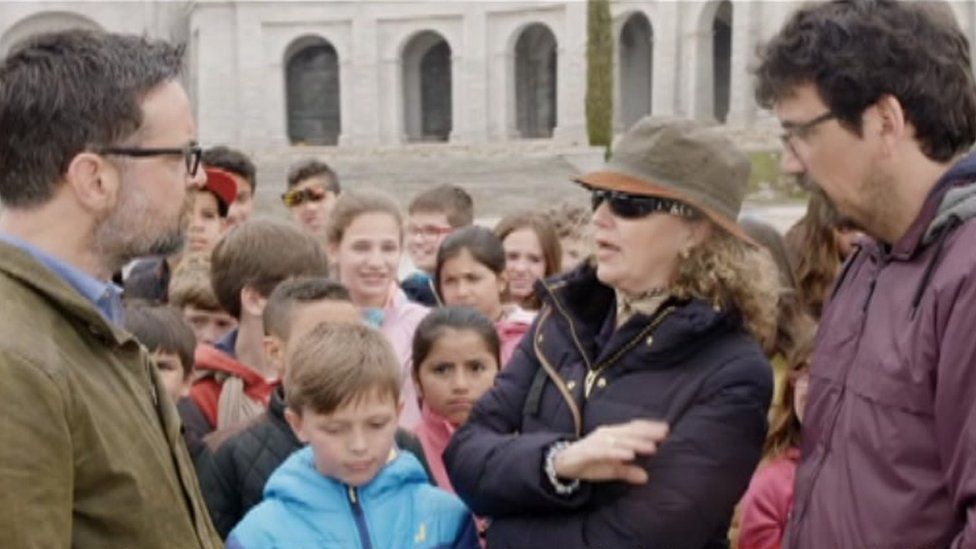
"Democracia!" they answer, the word echoing around the shrine of a brutal dictator.
Timothy Harrington may not have finished his war, nor did his comrades stop fascism from triumphing and ruling for 36 years. But eventually, fascism was defeated in Europe.
The role of the young men from Wales and the rest of the United Kingdom who left their families to contribute to this effort deserves to be remembered.
- Watch Richard Harrington: My Grandfathers War on BBC Two on Saturday, 15 April, at 21:00 BST or on the BBC iPlayer
Tuesday, 28 February 2017
"SIETE DÍAS DE ENERO", DE JUAN ANTONIO BARDEM
Seven Days in January
From Wikipedia, the free encyclopedia
Jump to navigationJump to search
Seven Days in January
Siete días de enero
Directed by Juan Antonio Bardem
Produced by Roberto Bodegas
Written by Gregorio Morán
Juan Antonio Bardem
Starring Manuel Angel Egea
Cinematography Leopoldo Villaseñor
Release date
August 1979
Running time 180 minutes
Country Spain
Language Spanish
Seven Days in January (Spanish: Siete días de enero) is a 1979 Spanish drama film directed by Juan Antonio Bardemabout the 1977 Massacre of Atocha. It was entered into the 11th Moscow International Film Festival where it won the Golden Prize.[1]
Cast[edit]
Manuel Angel Egea as Luis Maria Hernando de Cabral
Madeleine Robinson as Adelaïda
Virginia Mataix as Pilar
Jacques François as Don Thomas
Alberto Alonso as Cisko Kid (as Alberto Alonso Lopez)
References[edit]
Jump up^ "11th Moscow International Film Festival (1979)". MIFF. Archived from the original on 3 April 2014. Retrieved 20 January2013.
External links[edit]
Seven Days in January on IMDb
"SIETE DÍAS DE ENERO", DE JUAN ANTONIO BARDEM en La Espina Roja:

Título original: 7 días de enero
Año: 1979
Duración: 28 min.
País: España
Director: Juan Antonio Bardem
Guión: Juan Antonio Bardem, Gregorio Morán
Música: Nicolas Peyrac
Fotografía: Leopoldo Villaseñor
Reparto: Manuel Egea, Fernando Sánchez Polack, Virginia Mataix, José Manuel Cervino, Madeleine Robinson, Alberto Alonso
Sinopsis: Reconstrucción de los trágicos acontecimientos ocurridos en España en el mes de enero de 1977: el atentado de un grupo de ultraderecha contra un despacho de abogados laboralistas de la calle Atocha, vinculados al Partido Comunista, en el que murieron cuatro letrados y un administrativo y quedaron malheridos otros cuatro abogados. La matanza fue reivindicada por La Triple A (Alianza Apostólica Anticomunista) y fue el suceso más grave ocurrido en la llamada Transición española.
Año: 1979
Duración: 28 min.
País: España
Director: Juan Antonio Bardem
Guión: Juan Antonio Bardem, Gregorio Morán
Música: Nicolas Peyrac
Fotografía: Leopoldo Villaseñor
Reparto: Manuel Egea, Fernando Sánchez Polack, Virginia Mataix, José Manuel Cervino, Madeleine Robinson, Alberto Alonso
Sinopsis: Reconstrucción de los trágicos acontecimientos ocurridos en España en el mes de enero de 1977: el atentado de un grupo de ultraderecha contra un despacho de abogados laboralistas de la calle Atocha, vinculados al Partido Comunista, en el que murieron cuatro letrados y un administrativo y quedaron malheridos otros cuatro abogados. La matanza fue reivindicada por La Triple A (Alianza Apostólica Anticomunista) y fue el suceso más grave ocurrido en la llamada Transición española.
Siete días de enero, 38 años después. Notas para un cine-forum
Por Pepe Gutiérrez-Álvarez
Los asesinatos de Atocha y de Vitoria señalaron el punto más alto de la estrategia de la tensión en el momento de mayor agitación de la Transición…

Por Pepe Gutiérrez-Álvarez
Los asesinatos de Atocha y de Vitoria señalaron el punto más alto de la estrategia de la tensión en el momento de mayor agitación de la Transición.
A diferencia del caso de Vitoria que fue tratado desde el cine décadas después (Llach: La revuelta permanente, de Lluís Danés, 2006), Siete días de enero, que evoca los hechos de los abogados laboristas de Atocha, resultó un film a pie de cañón. Pudo haber sido en su momento lo que llegó a ser “Z” durante el 68 francés, pero la situación era muy distinta.
Pero, mientras que el emblemático alegato de Costa-Gravas, no tuvo problemas significados de difusión fuera de Grecia, el de Bardem llegó a constituirse en un problema para los distribuidores y en no poca medida, para el partido al que pertenecían sus autores. En parte por la furiosa reacción de la extrema derecha (totalmente miada), pero también porque después de lo de Atocha, el PCE ya había mostrado su capacidad para impedir una huelga general y para sacar al pueblo de las calles.
No existe ningún debate sobre la veracidad de los hechos narrados en el film que, en sus trazos generales, se pueden consultar en el Wikipedia. Tampoco los ha habido sobre las “tramas negras”, otra cosa es el contexto de la matanza…Tal como decíamos, esta se inserta en una estrategia de la tensión alimentada por la represión policial (Vitoria), los atentados de la extrema derecha (Atocha), los ruidos de sables. Lo que es ya menos conocido, las advertencias lanzadas por la jerarquía de la CEOE, en el momento Carlos Ferrer i Salat, el mismo que aparece en un acto empresarial recogido en la serie sobre la Transición” de Victoria Prego, durante el cual proclama que las movilizaciones estaban llegando a un extremo que hacían temer…otra guerra civil o sea otro golpe militar-fascista.
Candidatos a Pinochet no faltaban, de hecho este fue un aprendiz de Franco.
La película de Bardem es de visión obligatoria para cualquiera que no viva en el país de la indiferencia. Se ajusta minuto a minuto a los hechos siguiendo una investigación exhaustiva del periodista Gregorio Morán, responsable del guión junto con Bardem. Ambos ofrecen un thriller duro y compacto sin concesiones. A pesar de su larga duración, la película mantiene el ritmo siguiendo las pautas del mejor cine político o mejor dicho, de denuncia. Su revisión no permite comprobar que Siete días de enero (España, 1978) no envejece. Al contrario, que ha ganado. Se nota que Bardem, conocía bien su oficio. Sobresale tanto la sencillez a la que le obligaron la parquedad de medios como la estética documental colaboran a crear un ambiente de plena autenticidad, los escenarios son los escenarios de los hechos, ninguna imagen es decorativa y ningún plano está de más. Todo encaja en una planificación en el que la indignación y la contención se equilibran, hay un buen equipo técnico, los actores se ajustan a los personajes –inolvidable José Manuel Cervino-, si bien se nota la falta de presupuesto. Igualmente hay que destacar el uso de la luz natural, que excluye cualquier atisbo de juego retórico.
La película era sin duda un acto militante, lo declaró sin tapujo su propio autor cuando declaró en el Mundo Obrero, de enero 2002: “Hice la película porque consideré –y considero– que era mi deber como ciudadano, como cineasta y como comunista.”
Bardem redondea la tremenda evocación con las imágenes finales del entierro de los abogados –anegadas en música de funerales– donde se produjeron grandes concentraciones. Supone un momento humano y emocionante, el recuerdo para unas personas que no merecían sin duda ese destino y que fueron victimas de un acto de terror digno de “la noche de San Valentín”. La película deja constancia del tipo de sicarios que frecuentaba una extrema derecha que se sabía protegida –el ministro del interior era Martín Villa-, de ahí que en ocasiones que encañonaba con sus pistolas a la gente, no tuvieran empacho en declarar: “Sí os mato, a mí no me pasará nada”.
La película fue un acto de denuncia airado que llegó en un momento en el que los pactos comenzaban a funcionar. Algunos de los cines en los que se estrenó fueron asediados por bandas ultraderechistas. Desde la prensa conservadora en la que no faltaron comentarios del tipo “a ver cuando Bardem hace una película sobre Paracuellos”, Otros fueron más sutiles o sea “centristas”. Argumentaron que la izquierda se sentía exonerada por los “ideales”, pero que no era tan tajante cuando los atentados provenían de la extrema izquierda, espacio en el que se juntaban a los oscuros grapos y a ETA, que tan buenos servicios han hecho al discurso bipartidista. Otros los trataron de resultar tan propagandístico como lo podía ser Boinas verdes, la contribución del peor John Wayne al “esfuerzo militar” norteamericano en el Vietnam. Tampoco faltaron quienes la acusaron de esquemática y maniquea…
Situados desde este último ángulo se podría invalidar todo el cine de denuncia, comenzando por el liberal de Hollywood tipo John Frankenheimer. Los que decían esto no se detenían en ningún análisis. Para hacerlo tendrían que desmentir los he4chos: las víctimas estaban comprometidos con la lucha de los trabajadores por sus mejores y su dignidad, algo que se suele ignorar cuando se ignora lo que era la condición obrera; lo hacían al tiempo que luchaban por las libertades, convencidos de que la democracia permitiría avanzar “por las buenas” en un avance social que, en teoría, nadie cuestionaba; lo hacía voluntariamente a pesar de los riesgos que –como se pudo ver-, corrían. Del otro lado se podría haber trabajado más como se forjan tipos así en un régimen que era delincuente y perverso desde el principio al final.
Tampoco faltaron los que ponderaron altamente el film. El novelista Jesús Fernández Santos por ejemplo, llegó a decir que era la mejor de su autor, aunque personalmente pienso que no llega a los niveles de Calle mayor (1956) o de Nunca pasa nada (1963), la mejor, una joya. Lo que está claro es que el tema fue tratado con rigor y eficacia cuando los hechos estaban todavía calientes y que el film cumplió plenamente sus objetivos. Para matizar más se tendría que haber rodado una serie de pequeñas películas…De haber sido así, podría haber habido un episodio sobre el “gran miedo” que causó la noticia de la masacre, entonces, como sucedió cuando el atentado contra Carrero o en la noche del 23-F, muchos militantes se buscaron otros domicilios. Otro episodio podría haberse centrado en la “suerte” –nunca mejor dicho- de los asesinos, una parte que nos revelaría el grado de putrefacción alcanzado por el régimen franquista.
Otro podría habernos informado como fue que un crimen de esta magnitud no dio lugar a una huelga general que habría parado el país de un extremo a otro, y porque todo se contuvo en un duelo silencioso que demostró la capacidad del aparato del PCE en controlar sus bases sin discusión. Otro quizás podría haber reunido en un viaje a personajes que justificaron este paso hacía atrás con otros que estuvimos en radical desacuerdo. Estos podrían admitir que, como había sucedido muchas otras veces, las luchas requieren una contención. Lo que no fue de recibo es que bajo el argumento –de los dirigentes- de que “no se podía ir más allá”, se operara una desconstrucción total de los movimientos sociales que desde la base luchaban por los derechos sociales y democráticos. Mucha de la gente que “se la jugó” entonces se sintió utilizada.
En un artículo en El País (Atocha, 22-01-15) Jorge Martínez Reverte, evoca el aniversario de la masacre como un referente muy pertinente de lo queCharlie Hebdoha sido para Francia. Evoca un barrio en “olía entonces a trabajador del metal y de la construcción. Y olía a comunista. En aquel piso del número 55, los fascistas dieron sin quererlo la gran oportunidad para que la hoy denostada Transición se pudiera acometer con éxito.” Un lugar “sigue oliendo a calamares y todavía huele algo a una cosa que parece del pasado: a clase obrera, a trabajadores organizados, a gente que les defienda de una reforma laboral que tiene solo una cara: el abaratamiento de la mano de obra.”
Luego hace una pirueta para romper una lanza a favor de la historia oficial de la Transición que él vivió bajo la sombra de el Príncipe (Felipe): ¿Cómo se puede decir, si uno es un bien nacido, que aquello fue un pacto de élites? ¿Cómo se puede decir eso de un proceso que se cimentó en la sangre de toda aquella gente?
La respuesta es concluyente: el pueblo en la calle, la sangre de las numerosas víctimas de la estrategia de la tensión, fue utilizada como “also starring” o sea como peones de pactos fraguados en los pasillos del poder o en las cafetería. Reverte concluye diciendo que desde Atocha proclama Je suis CCOO…Quizás, pero sus CCOO son las de José Mª Fidalgo , tan mimado por los “boys” de PRISA.
Tengo el recuerdo que allá por principios de los ochenta, Reverte (junto con Julio Rodríguez Aramberri) escribieron en Zona abierta, una revista que hasta entonces había presumido de marxista, un artículo titulado Mandel en el país de las maravillas en que trataban al que –hasta entonces- habían considerado como su maestro, como un viejo chocho que todavía seguía con los esquemas obreristas del viejo Kart…Así nos fue, porque todo lo que nos ha caído encima en los últimos tiempos no es más que la culminación de una derrota que empezó por entonces.
Quizás en aquellos siete días de febrero.
Análisis teórico:
Plus documento encontrado en Youtube del perfil de un fascio que no se oculta y que no es censurado por nadie en este mundo tan hipócrita en el que vivimos.
Siete días de enero es la película que Juan Antonio Bardem (dirección y guión) consagró a los hechos fatídicos ocurridos el 24 de enero de 1977, por los que resultaron asesinados varios abogados laboristas vinculados al Partido Comunista de España y a Comisiones Obreras. Al suceso se le conoció pronto mediatica y popularmente como la matanza de Atocha. Sin duda, el film es una buena muestra de cine político en el sentido más fuerte; en cuanto cine político partidario, concretamente en cuanto sirve a la lucha política del PCE (el propio Bardem declaró en 2002: «Hice la película porque consideré -y considero-que era mi deber como ciudadano, como cineasta y como comunista»).
Si la materia de la película es inseparable de la dialéctica política de la época, en cuanto a su forma, Bardem añade materiales documentales «reales» a los elaborados de modo ficticio, con lo que pretende proporcionar un mayor realismo a la cinta, una mayor potencia legitimadora y moral. Por ejemplo, incluyendo al final imágenes reales, documentales (no ficticias) procedentes del entierro de los asesinados.
La tesis política que desarrolla cinematográficamente el comunista Bardem coincide con la idea de la «estrategia de la tensión», al modo fascista. Según esto, los hechos de Atocha constituirían una «provocación» fascista destinada a desequilibrar a los grupos de lucha obrera, esencialmente pacíficos. Bardem convierte en realidad cinematográfica esta idea partidaria; los comunistas aparecen como luchadores por la libertad del porvenir, en cambio, los «fascistas» vinculados a una caduca burguesía franquista («la cruzada de liberación no ha terminado todavía»), al clero, a la policía y a la milicia, son retratados sin reparar en gastos retóricos. Se cuestiona incluso la estética, o la misma sexualidad de los «fascistas»; episodios por cierto nada desdeñables, ya que permiten reforzar la impresión de gran decadencia de la «extrema derecha» española. Esta «derecha fascista» actuaría movida por impulsos más etológicos que morales o auténticamente filosóficos, y ello frente al desprendimiento e idealismo de los militantes comunistas. Se subraya, paralelamente, el contraste entre la unidad idealista y el cooperativismo de los comunistas, y el caos de corrupción, desunión y desconfianza que reina entre los «fascistas». Otro elemento a considerar: mientras que los fascistas apelan a la defensa de España, los comunistas lo hacen a la solidaridad de clase, al progreso y la «libertad».
Por supuesto, el partidismo de Bardem tiende a remarcar lo que el recientemente fallecido Jean François Revel llamó la gran «mascarada» de la izquierda. La violencia de la izquierda, que existe accidentalmente, sólo puede ser una violencia legítima, puesto que se ejerce desde la idea de una moralidad superior: la lucha por la emancipación obrera, y de la misma «humanidad». Mientras que la violencia de la derecha, que existe necesesariamente, en virtud de su propia naturaleza, solo puede aparecer como una «provocación» o una especie de regurgitación del instinto animal, de la lucha por la ambición personal, de las bajas pasiones, etc. Fuente: Cine Político Hispano
Si la materia de la película es inseparable de la dialéctica política de la época, en cuanto a su forma, Bardem añade materiales documentales «reales» a los elaborados de modo ficticio, con lo que pretende proporcionar un mayor realismo a la cinta, una mayor potencia legitimadora y moral. Por ejemplo, incluyendo al final imágenes reales, documentales (no ficticias) procedentes del entierro de los asesinados.
La tesis política que desarrolla cinematográficamente el comunista Bardem coincide con la idea de la «estrategia de la tensión», al modo fascista. Según esto, los hechos de Atocha constituirían una «provocación» fascista destinada a desequilibrar a los grupos de lucha obrera, esencialmente pacíficos. Bardem convierte en realidad cinematográfica esta idea partidaria; los comunistas aparecen como luchadores por la libertad del porvenir, en cambio, los «fascistas» vinculados a una caduca burguesía franquista («la cruzada de liberación no ha terminado todavía»), al clero, a la policía y a la milicia, son retratados sin reparar en gastos retóricos. Se cuestiona incluso la estética, o la misma sexualidad de los «fascistas»; episodios por cierto nada desdeñables, ya que permiten reforzar la impresión de gran decadencia de la «extrema derecha» española. Esta «derecha fascista» actuaría movida por impulsos más etológicos que morales o auténticamente filosóficos, y ello frente al desprendimiento e idealismo de los militantes comunistas. Se subraya, paralelamente, el contraste entre la unidad idealista y el cooperativismo de los comunistas, y el caos de corrupción, desunión y desconfianza que reina entre los «fascistas». Otro elemento a considerar: mientras que los fascistas apelan a la defensa de España, los comunistas lo hacen a la solidaridad de clase, al progreso y la «libertad».
Por supuesto, el partidismo de Bardem tiende a remarcar lo que el recientemente fallecido Jean François Revel llamó la gran «mascarada» de la izquierda. La violencia de la izquierda, que existe accidentalmente, sólo puede ser una violencia legítima, puesto que se ejerce desde la idea de una moralidad superior: la lucha por la emancipación obrera, y de la misma «humanidad». Mientras que la violencia de la derecha, que existe necesesariamente, en virtud de su propia naturaleza, solo puede aparecer como una «provocación» o una especie de regurgitación del instinto animal, de la lucha por la ambición personal, de las bajas pasiones, etc. Fuente: Cine Político Hispano
Plus documento encontrado en Youtube del perfil de un fascio que no se oculta y que no es censurado por nadie en este mundo tan hipócrita en el que vivimos.
Tuesday, 7 February 2017
The impact and legacy of twentieth-century Spanish colonial policy on the socio-political development of Guinea Ecuatorial
Guinea Ecuatorial or Equatorial Guinea is one of the least known former Spanish colonies and for many, this small African nation is seen as little more than an exotic African backwater, located somewhere behind the Congo. As an exotic reminder of Spain's former colonial empire, it often stands alongside the Philippines in studies on the global usage of the Spanish language although unlike Manila, the Spanish government's cultural organ, the Instituto Cervantes still does not have a centre there.

However, in recent years, Equatorial Guinea has begun to assume a more prominent role in world affairs, principally due to the discovery of vast deposits of natural resources in the country and its surrounding waters and in particular, oil. [1] As a result of this burgeoning geo-political importance, the hitherto ostracized dictator Teodoro Obiang Nguema [2] and Equatorial Guinea have come in from the international cold in recent years and Malabo has a growing line of Western suitors wooing it and queueing up to share in the country's transformation. Indeed, one could even speculate on how the discovery of these oil deposits fifty years ago could have changed the course of not only, Equatorial Guinea but moreover of Francoism and by extension, contemporary Spain. [3]

Spain is mentioned here not only for the purposes of this article but because for almost all its modern history, Equatorial Guinea, or the colonial territories of Fernando Poo and Río Muni [4] as they were previously known, was ruled by Spain and Spain and the Spaniards remain the most powerful external influence in the political, economic and cultural life of its former colony. [5] Likewise, Equatorial Guinea also plays a vital role in contemporary Spanish history as one of Spain's last colonial outposts and the territory served as the alma mater for many of the most hardline and intransigent members of Franco's infamous bunker of the 1970's including Luis Carrero Blanco who had first served in Río Muni in 1927. [6]

Given the long history of Spanish involvement in Equatorial Guinea, there is an unusual dearth of literature on the subject and most studies have tended to concentrate on linguistic questions or on the development of an indigenous literary tradition in Spanish. [7] Although of clear importance, there has been very little academic work carried out on society or history in Equatorial Guinea before its independence from Spain in 1968 and in an attempt to redress this, [8] this article aims to focus on a hitherto untouched academic subject, the background to and course of the Spanish Civil War in Equatorial Guinea. As Equatorial Guinea was an integral part of Spanish territory at the time, the trajectory of the war there provides a fascinating sideshow to the cataclysmic events in Spain which would shape the country's contemporary history. Furthermore, an analysis of how the war and its eventual outcome was viewed by the local population provides us with some very interesting insights and variations on the much-studied socio-political divisions of Civil War Spain and their roots. [9]

The Spanish Civil War will undoubtedly be remembered by history as one of the great tragedies of our time. A bitter and bloody conflict, the repercussions of which still resound throughout contemporary Spain, it pitted Spaniard against Spaniard and brother against brother in a three-year long struggle which would leave Spain with the legacy of a tattered social fabric and a ravaged and impoverished country. [10]

Indeed, the fact that Spain has risen almost phoenix-like from the ashes of the Civil War carnage to take her place once more amongst the European family of nations has been one of the great political and social miracles of the latter half of the twentieth century. The Spanish Civil War has been of particular fascination to many due to its international and ideological nature. Seen as a proxy war between the minions of communism and a new world order against the old forces of tradition, religion and capitalism, Spain immediately became the chessboard for an international struggle of conflicting ideologies, a struggle which would evolve into the Second World War and in it's final metamorphosis bring the world close to Armageddon in the heady days of the Cold War which have left such an indelible imprint on our recent history.

As such, we often tend to see the Spanish Civil War in monochrome terms, black versus white; vencedores contra vencidos; right versus wrong. However, when the war is taken outside an exclusively Spanish setting, these divisions do become somewhat blurred and the Irish experience in Civil War Spain is one example where one sees at times a highly paradoxical but clearly identifiable crossover in ideological make-up between some members of O'Duffy's Irish Brigade who fought for Franco and the International Brigades who fought against him. [11]

However, the Spanish Civil War in Equatorial Guinea presents us with a further novel perspective on the conflict and while, the aim of this article is by no means to demean the importance of the great ideological battles which were being fought on Spanish battlefields, it does present a new and interesting dimension to the conflict which surely merits further study. As aforementioned, the background to and course of the Spanish Civil War in Equatorial Guinea is an academic subject which has been hitherto neglected although quite an amount of archival material does exist in the Ministry for Foreign Affairs and Army Archives in Spain and I am indebted to them for their assistance along with the Embassy of Guinea Ecuatorial in Spain, the Casa de Africa in Madrid and various academic institutions in Equatorial Guinea itself, notably the National University of Equatorial Guinea (UNGE) and the Centro Cultural Hispano-Guineano. [12]

GUINEA - ELECCIONES PRESIDENCIALES: Santa Isabel (Fernando Poo), 22-9-1968
Equatorial Guinea is probably the least well known Spanish-speaking country in the world. [13] Situated on the west coast of Africa and encircled by the Francophone Cameroons and Gabon, it is composed of a coastal region, where the city of Bata is located and five offshore islands with the administrative capital, Malabo being situated on the largest, Bioko. Its population of almost 600,000 is even by African standards, quite young and unlike many of its neighbours, there has been little emigration in the contemporary period. On the contrary and mainly due to the discovery of oil, there has been, in recent years, a growing increase in economic migration to Equatorial Guinea from poorer neighbouring states such as Ghana and Benin.
It was in 1471, twenty years before Columbus reached America that two Portuguese sailors, Fernao do Poo y Lopes Goncalves first set foot on the mainland of Equatorial Guinea and its offshore islands, the largest of which would bear in time the name of the former. At this time, the main interests of these European navigators was discovery of new territories and as such, conquest and exploitation would come later. Therefore, the Portuguese left Equatorial Guinea alone until the beginning of the sixteenth century when inspired by the proposals of Fray Bartolomé de las Casas in Chiapas (Mexico), the slave trade began in earnest and from the Gulf of Guinea, thousands of natives were captured and transported to the new Portuguese and Spanish territories in America.
No attempt was made to really colonize the country until 1778 when Spain and Portugal signed the Treaty of El Prado after intense negotiations led by the Conde de Floridablanca, Carlos III's prime minister. This treaty in effect gave Equatorial Guinea to Spain in return for a Spanish withdrawal from Portuguese territory which had been seized in Brazil. [14]

FRAGA EN GUINEA ECUATORIAL: Santa Isabel de Fernando Poo (Guinea Ecuatorial), 12-10-1968.- Manuel Fraga Iribarne, en nombre del Jefe del Estado, y el presidente de la República de Guinea Ecuatorial
However, Spanish colonization was not at first very successful with a mutiny during Joaquin Primo de Rivera's expedition in 1780 and real control of the colony continued to remain in the hands of the Portuguese slave-traders up until the mid-nineteenth century. During this period, British interests also enjoyed a growing sphere of influence in the colony with the foundation of Clarence City, present day Malabo, in 1827 and an influx of Methodist missionaries. [15] However, British interest in the colony was quite benign and of a predominantly economic nature but in response to the expansion of British influence and growing German interests in the region, Spain did return in strength to the colony with Carlos Chacón being named first Governor-General in 1858 after leading a Spanish expeditionary force back to the colony.
During the second half of the nineteenth century, the colonial struggle for territory in Africa continued and a weakened Spain lost considerable swathes of the Gulf of Guinea to France and Germany with the tacit approval of the interminable Paris Conference which was dividing up Africa at the time amongst the colonial powers. Coinciding with the crisis of '98, these losses were a grave affront to Spanish pride and in a direct response, the recently named Marquis of Muni and Governor General, Pedro Jover Tovar, lamenting that the Conference of Paris had been "un verdadero despojo a un pais desmoralizado" [16] and how Spain "ha salido del Continente negro del modo mas cursi posible", [17] committed suicide aboard the ship "Rabat" which was taking him back to Spain. [18]

FRAGA EN GUINEA ECUATORIAL: Santa Isabel de Fernando Poo (Guinea Ecuatorial), 12-10-1968.- Manuel Fraga Iribarne, en nombre del Jefe del Estado, y el presidente de la República de Guinea Ecuatorial
However, Spanish involvement in Equatorial Guinea was far from over and in many ways, Equatorial Guinea would, after 1898, increasingly help to feed Spain's imperial ambitions and compensate for its colonial losses in South America and the Philippines. Black Cubans were brought from the lost territories in America to populate Spain's African colony and missionaries began to set up permanent outposts. In 1907 Río Muni was divided up into six administrative areas with the island of Fernando Poo divided into four. Exploitation of the colony's natural resources and in particular, its forests began, along with the cultivation of cacao with the simultaneous creation of a Guardia Colonial in order to protect the colonists.

En 1926, como General de Brigada, es nombrado Gobernador Militar de los territorios españoles del Golfo de Guinea,
The arrival in power of Miguel Primo de Rivera in 1923 after a military coup hastened the initiation of a recruitment drive to strengthen the Spanish Army which was embroiled in a bitter colonial war in Morocco. [19] A fundamental part of this initiative was the encouragement of the recruitment of colonial subjects and the colonial question returned to the centre of the Spanish political agenda. In order to facilitate the recruitment of colonial subjects and increase control over Spain's remaining colonies, a series of controversial laws were passed during Primo de Rivera's regime which determined the legal status, entitlements and obligations of natives and colonists. The enforcement of these laws came under the aegis of the newly created Patronato de Indígenas in 1928 and when Alfonso XIII went into exile in Italy and the first Spanish Republic was declared on April 14th, 1931, there was great hope amongst some of the native population that certain laws might be repealed or that a new body would be set up which would serve better the interests of the native population.

However, the Republican government in Spain which quickly embarked on a policy of granting greater autonomy to constituent parts of the Republic such as Cataluña and the Basque provinces did not extend this campaign to Fernando Poo and Río Muni and during the lifetime of the Second Republic, colonial rule was actually strengthened and the territory "pacified" in the offical parlance. [20]
From May, 1931 onwards, there was a growing Spanish interest in the economic potential of Equatorial Guinea and under the supervision of successive governor-generals, namely Sostoa, Lemua and Manzaneque, the colony was turned into a giant factory with the native population working between twelve to fourteen hours daily in the large cacao plantations or lumberyards. Innovative and progressive social and economic programmes which were the hallmark of the Second republic in Spain were never extended to Equatorial Guinea and the only change of note in the Second Republic's colonial policy was its opposition to the power and influence of conservative, right-wing factions in the colony in order to transfer power and influence to those who had supported the establishment of the Second Republic. As such, the arrival of the Republic diluted the importance of the role of Claretian missionaries who had offered one of the few possibilities of social advancement for the native population [21] and by the time Alcalá Zamora's personal confidante, Sanchez Guerra was installed as Governor-General in 1935, the native population was in a worse position than ever with laws forcing them to purchase their food and other products from their plantation masters in what amounted to little more than legalized slavery.

EMBAJADOR DE GUINEA: Madrid, 6-11-1969.- El embajador de Guinea Ecuatorial, Esteban Nsue, entrega sus cartas credenciales al Jefe del Estado, Francisco Franco, durante un acto protocolario en el Palacio de Oriente. EFE/jgb lafototeca.com Image : efespseven368776
The heady days of the Popular Front government in Spain in the first half of 1936 had aroused great expectations amongst the native population and their leaders and there were rumours that a "model colony" might be established under French influence but such rumours never became a reality. Laws were put in force which prohibited the sale of alcoholic drinks to natives, their purchase of property and most importantly, the native population still lacked any legal status or rights as Spanish citizens upon the outbreak of hostilities in Spain in July, 1936 and the onset of the Spanish Civil War.
At the outbreak of the Civil War, there was only one political party in Equatorial Guinea, the Frente Popular with only about 150 members and as could be expected, it was a much diluted version of the peninsular Frente Popular. Ideologically, it was much closer to social democracy than communism and it was dominated by a group of middle-class intellectuals who were an integral part of the colony's elite. However, as the events of July, 1936 began to unfold and news of Calvo Sotelo's assassination reached the colony on July 14th, 1936, [22] several political meetings were organized and there were various incidents between groups of "laicos" [23] from the Frente Popular and "clericales" [24] clustered around the landowners of the Casino.

As bank accounts were frozen in the colony and shipments failed to arrive from Spain, the political temperature rose throughout the summer until the 19th of September when Lt. Col. Serrano, the chief of the Guardia Colonial organized a uprising on Fernando Poo against Sánchez Guerra, the Republican Governor-General and following the instructions of Franco's government in Burgos, he assumed the role of Governor-General himself and declared a state of war with the immediate imposition of martial law.

The Civil War had now begun on the colony and Miguel Hernández Porcel, the Vice-Governor based on the mainland in Bata and himself a member of the Frente Popular, refused to recognize the authority of Serrano and the territories were henceforth cut off from each other. As a consequence, Francoist supporters or "clericales" on the mainland organized a march on Bata on September 23rd, 1936 which aimed to force Hernández Porcel to recognize the authority of Serrano and support the military rebellion in Spain. Hernández Porcel despatched a force to stop the marchers from reaching Bata and it is noteworthy that when both groups met, they were of course led by white officers with their battalions made up entirely of native, black soldiers. As the groups met at Comandachina, near the River Ekuku, the first group shouted "Alto en nombre de la Republica" [25]which was met by the other group's cry of "Viva el Ejercito, Arriba Espana". [26] A short battle ensued with the Republican pro-government force emerging victorious but with two native soldiers killed in combat. On the orders of Hernández Porcel, the ringleaders of the "clericales" were then expelled from Bata with most arriving in Gabon from where many travelled to Fernando Poo which was now a nationalist stronghold.

On the other side, the coastal region of Río Muni and in particular, its capital Bata became a Republican stronghold with leaders such as Jose Sierra Companys, a cousin of the leader of the Catalan Generalitat and Miguel Pozanco dominating the political scene. However, as the war progressed in Spain, the isolation of Río Muni combined with Republican losses in the peninsula rendered the territory's situation extremely difficult as there was only one ship at the Republic's disposal and communication with Spain was now almost impossible. This ship was the ironically named Fernando Poo which was converted in 1936 into a prison for missionary priests and nuns along with other clerical conspirators.
When the Nationalist ship, the Ciudad de Mahón arrived at Fernando Poo in October, 1936, it was quickly requisitioned by Serrano and the Nationalists who used it to shell Bata and the aforementioned prison ship, the Fernando Poo. Many of the prisoners died on board during the shelling and after an expedition of Moorish nationalists soldiers disembarked in Bata, most of the remaining Republicans fled into the interior from where they reached the Gabonese border. Those that remained were deported to the Canary Islands in November, 1936.
As would be expected, the sector of the population which suffered most from this struggle was the native population who had been caught in the crossfire between both sides and who had endured great privation as the colony experienced a shortage in medical supplies, etc. [27]
The defeat of the Republic was not looked on with great regret on the part of most of the native population and their tribal leaders and their hopes now rested on the colonial policy of the Spanish nationalists which would not bring them closer to self-determination or independence but would establish almost immediately a stronger and less tenuous link between the native population and the Spanish metropolis. The first step in this policy was the immediate renaming and granting of legal staus to the native districts so by 1937, Kogo had become Puerto Iradier, Niefang, Sevilla and Bimbiles, Valladolid. [28]
In fact, the Nationalists, in stark comparison with the Frente Popular, had definite plans for Fernando Poo and Río Muni and even with the outcome of the Civil War not decided in August, 1938, a decree was passed by the Nationalist government in Burgos which for the first time legally unified Fernando Poo and Río Muni as an integral part of Spanish territory. More importantly for the native population, the Statute of the Patronato de Indígenas was reformed on September 29th, 1938 with its expressed aim the "emancipación" or possible accession to Spanish citizenship of the native population and the building of schools, hospitals, orphanages and leper colonies to improve the plight of the native population.
The emancipation process was undoubtedly the most important and it was not instituted in full until a decree of September 30th, 1944 which set the conditions for the classification of the natives in two categories, "emancipados" y "no-emancipados". Within the "emancipados", there was a further sub-division into those who were fully emancipated and those who were only partially so. [29]
Full emancipation would lead to a native having Spanish citizenship and practically all the same legal rights and obligations as a peninsular Spaniard. Importantly, his wife and children would also enjoy the same rights. The only exception was the ban on mixed marriages but this also existed for white Spaniards. However, white Spaniards could have natives as "concubinas, queridas o amigas ocasionales". [30]
For a native to be emancipated, he had to be twenty-one years old, have the necessary maturity to be an adult in the metropolis, possess a professional or academic qualification from a secondary school and he had to have been employed for two years in a Spanish concern. On the other hand, it was also possible to be emancipated for those in the service of the Spanish state with a rank not less than indigenous auxiliary.
As aforementioned, emancipation brought to the natives Spanish citizenship rights, etc but on a practical level, it permitted them to act as witnesses in court, receive loans to the value of 10,000 pesetas, buy and consume olive oil, buy and consume wheat bread and to drink alcohol in public and in the same establishments as white Europeans. Partially emancipated natives enjoyed most of these benefits also but were not allowed buy or consume alcohol.
Of course, a whole new legal system and code had to be introduced to give a legal character to these changes and its composition was based on a framework which allowed appeal in the first instance to Territorial High Court in Madrid and in the final instance to the Supreme Court in Madrid.
Such changes may seem today to be nothing more than a system of watered-down apartheid and it is clear from archival material that political, economic and cultural hegemony continued to lie in the hands of the Spanish colonists. However, although it would be an exaggeration to call Francoist colonial policy enlightened, it did offer an initial chink of light for the native population as for the first time, they now enjoyed a legal status and could buy and sell property, etc. Paradoxically, this of course led to the seeds of nationalism being sown and in this first generation of "emancipados" we find the fathers of Equatorial Guinean independence such as Enrique Nvó, Acacio Mañé. Bonifacio Ondó and of course, Francisco Macías. Indeed, Macías would be the first elected President of Equatorial Guinea when it finally achieved independence in October 12th, 1968.
In conclusion, from a native point of view, one could state that the Spanish Civil War had little real ideological resonance in Equatorial Guinea as under the Second Republic and Frente Popular as under the Francoist regime, there still existed a clear division of masters and servants. However, the Francoist regime did have a definite colonial policy albeit one based on an idea of benevolent racial superiority and one must comment upon the absence of any type of policy of native advancement on the part of the Second Republic. On a practical level, it was the native population which suffered the privations and casualties of the Civil War as both sides forcefully recruited them into their respective factions as their foot-soldiers and the food shortages affected primarily the native population and in particular, native children.
That said, it is possible that a progressive colonial policy could have been followed by a Frente Popular government if it had had the opportunity but the 1936 military uprising prevented this government from embarking on any long-term programme. However, it is pertinent to point out that the situation of Equatorial Guinea outside its economic benefits to Spain were not mentioned in any Frente Popular manifestos, etc and the Second Republic which was so active on the question of granting autonomy to the historic nationalities in Spain was inactive during its life on the question of native rights and the development of the colonies.
The unfortunate legacy of this reality is the distrust in Equatorial Guinea for left-wing movements and the terrible relationship between the Socialist Government of Felipe Gonzalez from 1982 to 1996 and the regime of Teodoro Obiang in Equatorial Guinea is testament to this. [31] Amongst many ordinary Equatorial Guineans, there is a marked nostalgia for a strong leader like Franco as with any right-wing authoritarian regime, they identify individuals and figures with the improvement of their lot. It is this nostalgia and distaste in many ways for the democracy of the Second Republic which brought Obiang to power in 1979 and has maintained him there since despite repeated opposition attempts to overthrow him, many with foreign help. [32] Many of these attempts have foundered due to the lack of mass opposition or real interest in establishing democracy and in this way, although the last shells were fired in the Bay of Bata over sixty-five years ago, one could well argue that the Spanish Civil War and its legacy is still alive and well in Equatorial Guinea today.
About the Author
Dr. Wharton is a Lecturer in the Department of Languages and Cultural Studies at the University of Limerick, Ireland.
NOTES
1. Indeed, Equatorial Guinea has been referred to by some commentators as "the new Kuwait".
2. Obiang came to power after killing his uncle in a 1979 coup. Born in 1942, the President for life is referred to as "God" by his subjects. He received his military training in Spain at the elite Zaragoza academy which was also attended by the current Spanish King, Juan Carlos I.
3. For a comprehensive account of this period in Spain, see the recent Ross, C. Spain 1812-1996. London: Arnold, 2002.
4. Throughout the course of this article, place names except where explicitly stated shall be referred to in the context of the time-frame being discussed i.e. Spanish colonial names e.g. Fernando Poo and Río Muni will be predominantly used as the greater part of the article discusses the Spanish colonial period. However, the new name for Santa Isabel, Malabo is used when discussing Equatorial Guinea in a contemporary context.
5. There is a dearth of objective or independent academic studies on the Spanish colonial experience in Equatorial Guinea but some excellent studies are Liniger-Goumaz, M. Brève Histoire de la Guinée Équatoriale. Paris: L'Harmattan, 1988 and Nerín, G. Guinea Ecuatorial, historia en blanco y negro (hombres blancos y mujeres negras en Guinea Ecuatorial; 1843-1968). Barcelona: Ediciones Península, 1997.
6. Carrero Blanco was a close associate and intimate confidante of Franco Franco throughout the period of his dictatorship in Spain (1936-1975). Appointed prime minister by Franco in June 1973, he was killed by a car bomb on December 20th of the same year. Responsibility for this killing was claimed by the Basque separatist group, ETA.
7. See for example Ndongo Bidyogo, D. Antología de la literatura guineana. Madrid: Ed. Nacional, 1984 and for an excellent survey of the fortunes of the Spanish language in Equatorial Guinea, Quilis Morales, A. and Casado-Fresnedillo, C. La lengua española en Guinea Ecuatorial. Madrid: Universidad Nacional de Educación a Distancia, 1995. Two more recent studies are Ngom Fayé, M. "Literatura africana de expresión española." Cuadernos, 3 (2003), Centro de Estudios Africanos de la Universidad de Murcia, Murcia, pp. 11-135 and his more recent Ngom Fayé, M, ed. La recuperación de la memoria: creación cultural e identidad nacional en la literatura hispano-negroafricana. Alcalá de Henares: Ed. Universidad de Alcalá de Henares, 2004.
8. Amongst the few published works are Evuna Owono Asangono, A. El proceso democrático de Guinea Ecuatorial. Torrejón de Ardoz: Ed. Ceiba, 1994 and the older Ndongo Bidyogo, D. Historia y tragedia de Guinea Ecuatorial. Madrid, Ed. Cambio 16, 1977.
9. See for example Preston, P. The Coming of the Spanish Civil War. London: Macmillan, 1978 or the excellent new re-issue of the seminal Brenan, G. The Spanish Labyrinth. Cambridge: Cambridge University Press, 1990.
10. There are many comprehensive studies of the Spanish Civil War. Amongst the best and most complete are Jackson, G. A Concise History of the Spanish Civil War. New York: John Day, 1974 and Thomas, H. The Spanish Civil War. New York: Eyre and Spottiswoode, 1961 or the recent publication in Spanish, Vilar, P. La Guerra Civil Española. Barcelona: Ed. Crítica, 1999.
11. See Keene, J. Fighting for Franco. London: Leicester University Press, 2001 for a good account of foreign involvement in the Nationalist ranks. For an account of foreign participation in the defence of the Spanish Republic, two good sources are Castells, A. Las brigadas internacionales de la guerra de España. Barcelona: Ed. Ariel, 1974 and the older Brome, V. The International Brigades, Spain 1936-1939. London: Heinemann, 1965.
12. Academic research on Equatorial Guinea in the above institutions is hampered by the strained and unpredictable relationship which exists between Spain and Teodoro Obiang's Equatorial Guinean regime. The fact that the leader of opposition to Obiang, Severo Moto, still lives in exile in Spain is an obvious obstacle to any improvement in the relationship and in Malabo, Spain is continuously identified with efforts to destabilize and topple Obiang's regime.
13. Unlike another often forgotten former colonial outpost, the Philippines, as aforementioned, Equatorial Guinea does not even have a centre of the Instituto Cervantes, the cultural wing of the Spanish government. The only former colony which is vying with it for most isolated status in the Spanish-speaking world may be the disputed territory of Western Sahara (the former Sahara Española).
14. By virtue of this treaty, Spain returned to Portugal the disputed territories of Santa Catalina and Río Grande in the south of Brazil.
15. Foremost amongst these early British colonists were Commodore Bullen who first took Fernando Poo and Captain William Fitz Owen who established a permanent colonial settlement on the island and founded the city of Clarence in honour of the Duke of Clarence, William IV. Spanish colonists would later re-christen the city Santa Isabel and today, it is known as Malabo, the capital of modern Equatorial Guinea.
16. Comments attributed to Jose María de Areilza y Fernando María Castiella, both writers and politicians in Franco's Spain. The comment roughly translates as " the pillaging of the colonies of a demoralized country".
17. Statement attributed to the chief Spanish negotiator, León y Castillo who was also the Spanish ambassador to France at the time. It translates as, "Spain had left the dark continent in the shabbiest way possible".
18. See Bolekia Boleká, J. "Panorama de la literatura en español en Guinea Ecuatorial." El Español en el Mundo; Anuario del Instituto Cervantes, 2005. Barcelona: Círculo de Lectores, 2005. Pp. 100-102.
19. For a good contemporary account of the Moroccan Wars and their impact on contemporary Spain, see Harris, W. France, Spain and the Rif. London: Edward Arnold, 1927 or for an in-depth analysis, the much more recent Balfour, S. Deadly Embrace; Morocco and the Road to the Spanish Civil War. New York: Oxford University Press, 2002.
20. For a good study of the Second Republic in Spain, see Robinson, R. The Origins of Franco's Spain; The Right, the Republic and Revolution, 1931-1936. Newton Abbot: David and Charles, 1970 or the long Arrarás, J. Historia de la segunda República española (4 vols.). Madrid: Ed. Nacional, 1970.
21. The Claretians have been one of the most important religious orders in the trajectory of the modern history of Equatorial Guinea both up to and after independence in 1968. The current leader, Teodoro Obiang was educated by the Claretians and the continuing influence of this religious education can be seen in his private audience and meeting with Pope Benedict XVI in December, 2005. The first Spanish missionaries to arrive in Fernando Poo had been Jesuits but due to external problems in Spain, they were expelled in 1872. A good account of the early role of religion in the colony is contained in Castro Antolín, M. L. "Organización de la Guinea Española en la segunda mitad del siglo XIX". Estudios Africanos, 27-28 (2001), Asociación Española de Africanistas, Madrid, pp. 57-103.
22. The assassination on July 13th, 1936 of the Nationalist leader, José Calvo Sotelo by Republican sympathizers (in revenge for the murder of José Castillo by Falangists a day earlier) is often seen as the spark which ignited the already planned July 17th uprising of General Franco and his co-conspirators and the outbreak of Civil War the next day.
23. Literally meaning "seculars", it was attributed to Republican supporters who were in the majority, anti-clerical and who supported a strict separation between the church and the state.
24. Literally meaning "clerical supporters", it refers to the opposite of "laicos" and these would tend to be conservative supporters who advocated law and order and strong religious interference in the running of the state and society. In Equatorial Guinea, the term was attributed especially to supporters of the Nationalist rebels in Spain who enjoyed the firm backing of the Catholic Church.
25. Translates as "Halt in the name of the Republic", a popular cry which would be heard throughout the Spanish Civil War.
26. Translates as "Long Live the Army. Up Nationalist Spain". Arriba España was the rallying cry of the Nationalist rebel forces and it still has powerful connotations for right-wing groups in contemporary Spain.
27. For a good account of Equatorial Guinean social history, see the aforementioned Liniger-Goumaz, M. Brève Histoire de la Guinée Équatoriale. Paris: L'Harmattan, 1988.
28. A similar policy of hispanizication was introduced by the Francoist regime in the Moroccan colonies after the Nationalist victory in the Spanish Civil War.
29. For accounts of this period, see Sáez de Gevantes, L. El africanismo español. Madrid: CSIC, 1963, Díaz Pinés, O. Los territorios españoles del Golfo de Guinea. Madrid: Publicaciones Españolas, 1952. The regime-financed CSIC (Consejo Superior de Investigaciones Científicas) also produced throughout the 1950's and 1960's a range of reports on Equatorial Guinea dealing with specific areas of native development in the colony such as education and health.
30. See the Francoist Decree of September 30th, 1944 concerning the civil rights and obligations of the native and colonial population of Equatorial Guinea.
31. See the aforementioned Liniger-Goumaz, M. Brève Histoire de la Guinée Équatoriale. Paris: L'Harmattan, 1988. The problematic relationship between Spain and her former colony is also amply covered by the Spanish press and in particular by the daily, El País. Spain still remains home to many political exiles from Equatorial Guinea.
32. Indeed, Teodoro Obiang has been one of the longest-serving dictators in Africa and despite allegedly suffering from advanced prostate cancer and being in extreme ill health, he continues to maintain a resilient and tight grip on power. His cult of personality is paramount in a country where in July, 2003, state radio officially declared him a "God" and where many Equatorial Guineans sport a daily uniform of a t-shirt with a photo of the president for life emblazoned across it. Perhaps eerily echoing his mentor in Francoist Spain, Obiang's photograph is omnipresent throughout the country and it is rare to find any location or gathering without a picture of Obiang present. Barrie Wharton
Subscribe to:
Posts (Atom)